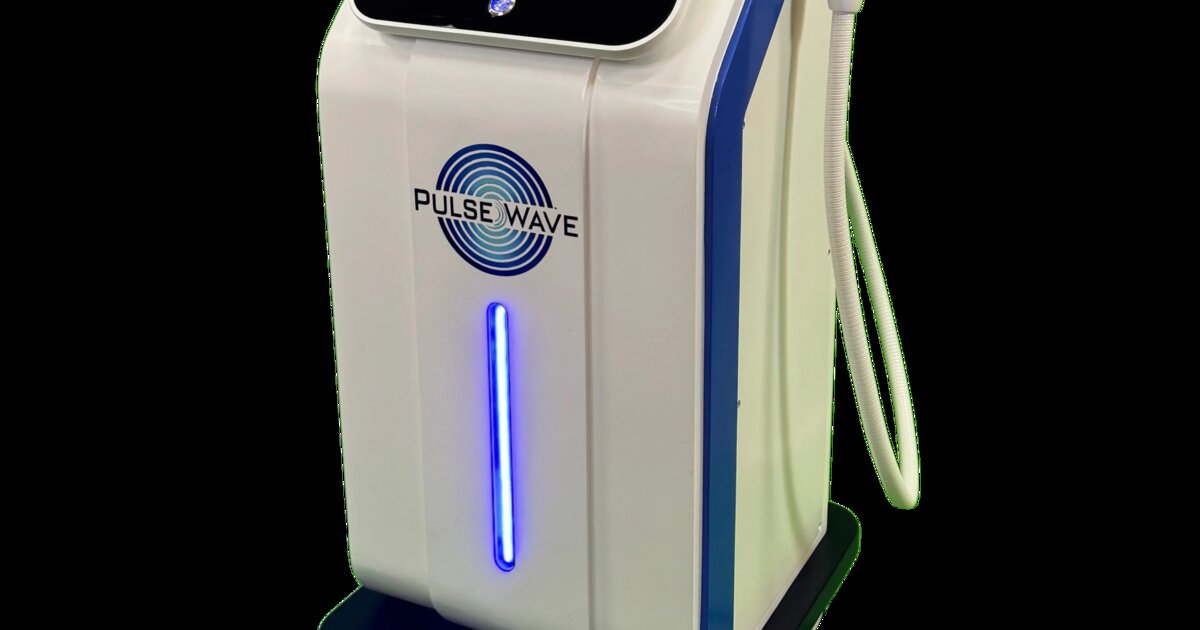
If you have searched for "sound wave therapy" lately, you have probably noticed that two very different things share the same vocabulary. One is therapeutic ultrasound, a tool that has been in physical therapy and chiropractic offices for decades. The other is PulseWave, a form of extracorporeal shock wave therapy that we use at Maryland Chiropractic & Physical Medicine in Edgewater, MD.
Patients from Edgewater, Riva, Mayo, and across Anne Arundel County often ask us some version of the same question: "Isn't that just ultrasound?" It is a fair question, and the short answer is no. In this article, Dr. Derek Curran explains how the two differ, what the research does and does not show, and how we decide which tool, if any, fits a given person.
The short version
Both devices use sound-based energy delivered through the skin with a handheld applicator. Past that, they diverge:
- Therapeutic ultrasound uses continuous or pulsed high-frequency sound waves, and it is generally described as a gentle, low-intensity modality. Many patients feel mild warmth, or nothing at all.
- PulseWave shock wave therapy delivers focused acoustic waves: brief, higher-energy mechanical pulses. Patients typically feel a tapping or pulsing sensation, and over a tender spot it can feel intense for a short time.
Think of it this way: ultrasound is a steady hum, while shock wave therapy is a series of distinct taps. They are different physical signals, designed to do different things in the tissue.
What is therapeutic ultrasound?
Therapeutic ultrasound should not be confused with the diagnostic ultrasound used to look at a baby or an organ. The therapy version sends sound waves at a frequency far above human hearing into soft tissue. It has long been used in clinical settings with the goal of gently warming tissue and stimulating local activity in the area being treated.
It is a long-standing tool, and we include it among the supporting therapies in our combined programs, alongside muscle stimulation, myofascial release, trigger point therapy, and spinal traction. You can read about our full range of care on our services page.
What is PulseWave shock wave therapy?
PulseWave is a form of extracorporeal shock wave therapy (ESWT). A handheld applicator delivers focused acoustic waves into the treated area. These are mechanical pulses: not electricity, not heat, and not a drug.
The therapy is designed to stimulate the body's natural healing response in the area being treated. Researchers have proposed that mechanical stimulation may influence local circulation, cell signaling, and how nearby nerves carry pain signals. Those proposed mechanisms are still being studied, and none of them should be treated as settled. For the full overview, see our PulseWave page and our article What Is PulseWave Therapy?.
Side-by-side: how they differ
Type of energy
Ultrasound delivers a smooth, continuous or rapidly pulsed wave of high-frequency sound. Shock wave therapy delivers discrete, high-energy acoustic pulses with a sharp rise in pressure. That sharp pulse is what makes it a "shock wave" rather than a vibration.
What you feel
Ultrasound is usually comfortable and often barely noticeable. PulseWave is typically felt as tapping or pulsing. Intensity is adjusted to your comfort, and we tell patients up front that a sensitive spot may feel strong for a short time.
Session length
Therapeutic ultrasound sessions in many offices run several minutes per area. PulseWave sessions are short as well, and the exact timing depends on the area and your plan. We go over what a visit looks like in What to Expect at Your First PulseWave Session.
Where each tends to be used
Therapeutic ultrasound has traditionally been used as a general soft tissue modality. Shock wave therapy has a growing research literature around tendon-related and other stubborn soft tissue problems, such as the areas we have covered in our articles on plantar fasciitis, tennis elbow, Achilles tendon pain, and shoulder pain.
What does the research say?
Patients deserve a plain answer, including the limits.
A 2022 narrative review by Smallcomb and colleagues in the American Journal of Physical Medicine and Rehabilitation looked at low-intensity therapeutic ultrasound, extracorporeal shock wave therapy, and radial shock wave therapy for tendon problems (publication record). The authors described all three as promising non-invasive options with fewer adverse effects than more invasive approaches, but they also reported mixed results across studies. They attributed this partly to the many possible settings within each treatment and to inconsistent measurement and reporting. They concluded there is insufficient evidence to say which ultrasound modality or settings work best, and they called for more research.
That is an honest picture: both tools are being studied, neither has a settled, one-size-fits-all answer, and the details of how a device is used matter.
On the ultrasound side, a Cochrane review of therapeutic ultrasound for chronic low back pain found little evidence that it makes a meaningful difference compared with a placebo (Cochrane summary). That does not mean ultrasound is useless for every problem, but it is a reminder that a familiar tool is not automatically a proven one.
On the shock wave side, the UK's National Institute for Health and Care Excellence (NICE) reviewed ESWT for chronic plantar fasciitis. Its guidance said the evidence on effectiveness was inconsistent but raised no major safety concerns. That review is older and research has continued since, but it shows why we do not make promises about outcomes.
What we can say honestly: the evidence for both approaches is developing, results vary from person to person, and the right choice depends on what your exam finds. Individual results may vary.
So which one is right for me?
Often, the answer is "it depends on the exam." A few factors we consider:
- Where and how long the pain has been present. Long-standing, localized tendon or soft tissue pain is the kind of problem where interest in shock wave therapy has grown.
- What is driving it. Pain can come from the joint, a nerve, the spine, or the muscle and tendon. A tool aimed at one tissue will not help much if the source is another.
- Comfort and preference. Some people prefer a gentler approach and some are comfortable with a stronger sensation.
- The rest of the plan. Neither tool is meant to work alone. We pair them with hands-on care, movement, and home guidance based on your findings.
If your history suggests something outside the scope of chiropractic care, we will tell you and help you reach the right provider.
Safety and who should not have shock wave therapy
Shock wave therapy is generally described as having mild side effects, such as temporary soreness, redness, or bruising at the treated area. It is not appropriate for everyone. It is typically avoided over certain areas and in certain situations, such as pregnancy, active infection, or over a tumor, and when someone takes blood-thinning medication or has a bleeding disorder, extra caution is needed. That is why we review your history before any treatment begins.
When to see a medical provider right away
Skip the clinic and seek urgent care if you have:
- Pain after a significant fall or accident, especially with deformity or inability to bear weight
- Fever together with a hot, swollen, or red joint
- Chest pain, shortness of breath, or sudden severe headache
- Numbness in the groin or saddle area, or new bowel or bladder problems
- Sudden weakness in an arm or leg
Frequently asked questions
Is PulseWave the same as ultrasound?
No. Both use sound-based energy, but ultrasound delivers a smooth, high-frequency wave, while PulseWave delivers focused acoustic pulses with higher energy. They are different tools with different feel, settings, and uses.
Does PulseWave hurt more than ultrasound?
It can feel stronger. Ultrasound is usually comfortable and mild. PulseWave is typically felt as tapping or pulsing, and a tender spot may feel intense for a short time. We adjust the settings to your comfort.
Is one proven better than the other?
Not across the board. Research on both is ongoing, results have been mixed, and reviewers have called for better-standardized studies. We do not promise outcomes, and results vary.
Can I have both?
In some plans, yes. Therapeutic ultrasound is one of several supporting therapies in our combined programs, and PulseWave may be considered when your exam supports it. We will talk through the options with you in person.
Will my insurance cover PulseWave?
Coverage varies. Please call the office and our team will explain what applies to you, or see our financing page for payment options.
How do I know if PulseWave is right for my pain?
Start with an exam. We take a history, test movement and strength, and look at the whole picture before recommending anything. Learn more about Dr. Curran and our team, or see the conditions we see most.
Who comes to your office?
Patients come from Edgewater and across Anne Arundel County, including Annapolis, Severna Park, Davidsonville, Riva, Crownsville, Mayo, and Arnold.
Take the next step
If you are weighing PulseWave against other options, we are glad to talk it through. You can get in touch or book a PulseWave visit.
Maryland Chiropractic & Physical Medicine 137 Mitchell's Chance Road, Suite 100, Edgewater, MD 21037 Phone: (443) 294-6873
Hours: Mon and Thu 8:30–12:30 and 2:30–6:30, Tue 8:30–12 and 2–4, Wed 8:30–2, Fri 8:30–2:30.
#EdgewaterMD #AnneArundelCounty
Educational disclaimer: This article is for general educational purposes and is not medical advice. It does not diagnose, treat, or cure any condition. Individual results may vary. Talk with a qualified healthcare provider about your own situation, and seek emergency care for severe or sudden symptoms.