If you live in Edgewater, Riva, or Mayo, you probably know the feeling: you roll onto your side at night and the outside of your hip lights up. Or you get up from a long drive across the Severn River bridge and the first few steps feel stiff and sore right at the point of the hip.
Pain on the outer hip is one of the more common complaints we hear at our office at 137 Mitchell's Chance Road in Edgewater, MD. It often gets called "hip bursitis," and many patients are surprised to learn that the name does not tell the whole story. In this article, Dr. Derek Curran walks through what is usually going on, what the research on PulseWave shock wave therapy does and does not show for this kind of pain, and how we approach it at Maryland Chiropractic & Physical Medicine.
What is outer hip pain?
The clinical name most commonly used today is greater trochanteric pain syndrome, or GTPS. The greater trochanter is the bony bump at the top of the thighbone that you can feel on the outside of your hip. Several structures attach or glide over this area: the tendons of the gluteal muscles, the iliotibial band, and small fluid-filled sacs called bursae.
According to MedlinePlus, GTPS is pain on the outside of the hip, sometimes spreading to the outer thigh. It can start sharp and settle into an ache. It tends to be worse when:
- Rising from a chair or bed
- Sitting for long periods
- Climbing stairs
- Lying on the affected side
MedlinePlus also notes that it is more common in older adults and in women, and that contributing factors can include overuse, a sudden jump in activity, a fall, differences in leg length, arthritis in the hip, knee, or foot, and muscle imbalances.
Why "bursitis" is an incomplete label
For years, almost every case of outer hip pain was called trochanteric bursitis. More recent clinical thinking points out that the gluteal tendons themselves are often involved, and that the picture can include irritated tendon, irritated bursa, and tight surrounding tissue all at once. That matters, because a plan that only focuses on one structure may miss the others.
Not every hip ache is GTPS
Pain in the hip region can come from several places, and sorting that out is the first job of any good exam. Outer hip pain can overlap with:
- Hip joint arthritis, which usually shows up in the groin or front of the hip
- Low back or sacroiliac joint irritation referring pain into the buttock and side of the hip
- Nerve irritation, including sciatica (see our article on sciatica care in Edgewater)
- Foot and ankle mechanics that change how force travels up the leg
This is why we start with a history and physical exam rather than a machine. If something looks outside the scope of chiropractic care, we will tell you and help you get to the right provider.
What is PulseWave shock wave therapy?
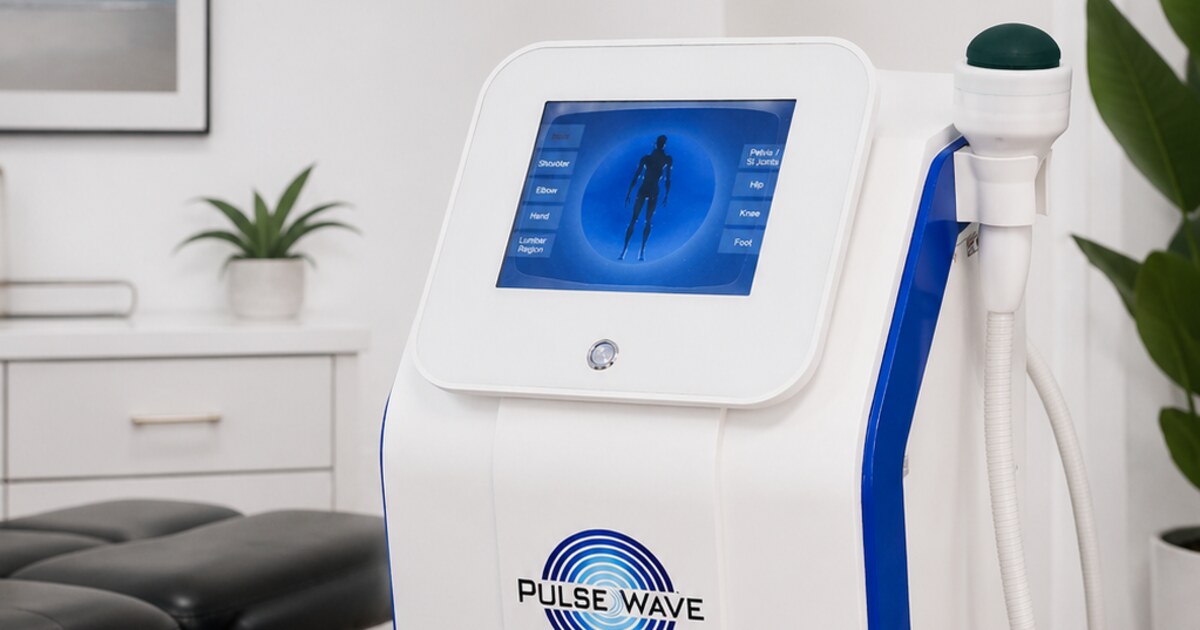
PulseWave is a form of extracorporeal shock wave therapy (ESWT). A handheld applicator delivers focused acoustic waves through the skin into the tissue beneath. These are mechanical pulses of sound energy. They are not electricity, not heat, and not a drug.
The idea behind the therapy is that these pulses are designed to stimulate the body's natural healing response in the treated area. Researchers have proposed that mechanical stimulation may influence local circulation, cell signaling, and how nearby nerves carry pain signals. These mechanisms are still being studied, and none of them should be presented as settled. You can read the full overview on our PulseWave page and in What Is PulseWave Therapy?.
What does the research say about shock waves for outer hip pain?
We believe patients deserve a plain answer here, including the limits.
Shock wave therapy has a longer research history in other tendon-related areas, and interest in applying it to the outer hip has grown. A 2023 randomised controlled trial published in Hip International by Heaver and colleagues compared focused shockwave therapy with an ultrasound-guided injection in people with greater trochanteric pain syndrome. The study's published summary describes ESWT as "a potential non-invasive management option" for this problem. That framing is worth taking at face value: it is a proposed option that researchers are still comparing against other approaches.
An earlier look by the UK's National Institute for Health and Care Excellence is a useful reality check. Its 2010 interventional procedures overview of shock wave therapy for refractory GTPS found only two non-randomised comparative studies, with mixed results, limited long-term data, and mostly mild side effects such as skin irritation or short-lived soreness. It was an older review and the research has moved since, but its core message holds: the evidence is still developing, and no one should promise you a specific outcome.
What we can say honestly:
- Research interest in shock wave therapy for outer hip pain is real and growing.
- Studies so far vary in design, protocols, and quality.
- Shock wave therapy is generally described as having a low rate of significant side effects, though temporary soreness or redness is possible.
- Individual results may vary, and no study can tell you how your hip will respond.
How we approach outer hip pain in Edgewater
At Maryland Chiropractic & Physical Medicine, we think of PulseWave as one possible tool within a broader plan, not a stand-alone answer.
Step 1: A thorough exam
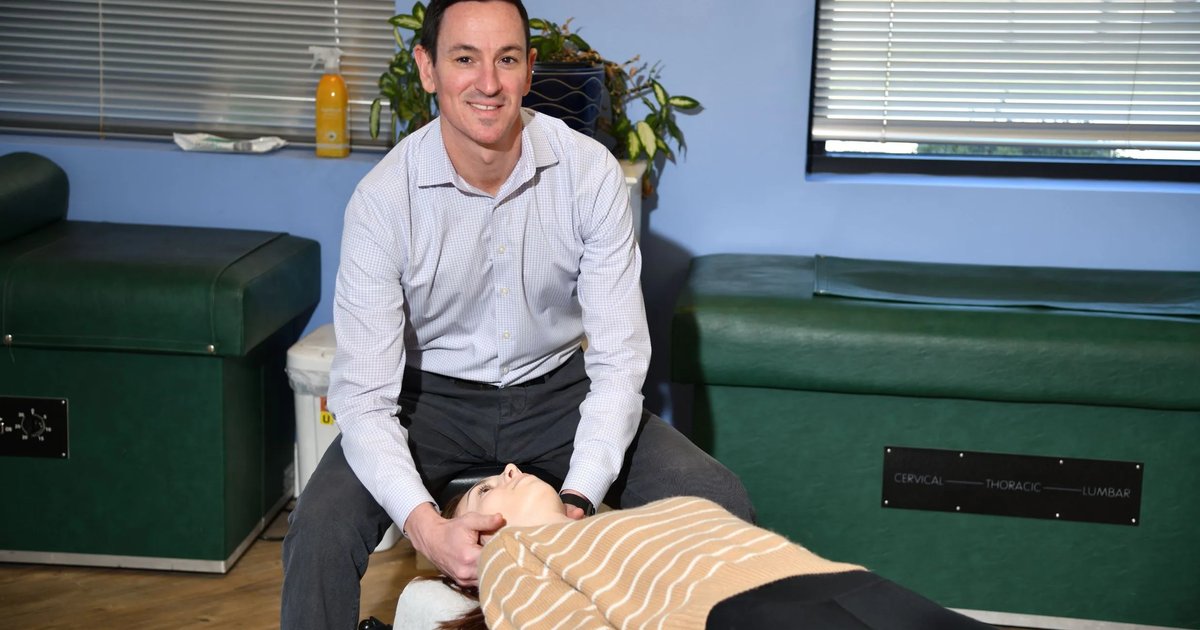
We ask when the pain started, what makes it worse, how you sleep, and what has changed in your routine. Dr. Curran examines the hip, low back, pelvis, and how you move and stand. If something suggests a problem that needs imaging or a referral, we say so.
Step 2: Looking at the whole chain
Outer hip pain often has company. Stiff spinal or pelvic joints, tight hip and thigh muscles, and mechanics in the foot can all change how load reaches the hip. Depending on what the exam shows, your plan may include chiropractic adjustments, soft tissue work, massage therapy, cupping, or movement guidance. You can see the range of options on our services page and the conditions we see.
Step 3: Considering PulseWave
If your presentation fits, PulseWave sessions may be part of the plan. A session is short. The applicator is moved over the sore area while focused acoustic waves are delivered. Most people describe a tapping or pulsing sensation that can feel intense over a tender spot, and the intensity is adjusted to what you can comfortably tolerate. There is no needle, no incision, and no downtime in the usual sense, though we may suggest you go easy on aggravating activity for a day or two.
Step 4: Support between visits
Practical habits matter. The MedlinePlus self-care list includes avoiding lying on the sore side (a pillow between the knees can help), limiting long stretches of standing, wearing cushioned low-heeled shoes, and gradually strengthening the core and hips once pain allows. We will tailor this to you.
Practical tips while you decide
- Sleep position: If you are a side sleeper, try the other side with a pillow between your knees, or lie on your back.
- Sitting: Avoid crossing your legs for long periods, which can compress the outer hip.
- Stairs and hills: Slow down on the Anne Arundel County hills and the stairs at the marina until things calm down.
- Activity changes: A sudden jump in walking, running, or standing time can aggravate the area. Increase gradually.
- Ice: MedlinePlus suggests icing a few times a day for the first couple of days of a flare-up.
When to get medical care first
Please do not wait on a chiropractic visit if you have any of the following. MedlinePlus lists these as reasons to seek immediate care:
- Hip pain after a serious fall or injury
- A deformed, badly bruised, or bleeding leg
- Inability to move the hip or put weight on the leg
- Pain that radiates down the leg
- Bowel or bladder problems
Also see a medical provider if symptoms return or do not improve after about two weeks of self-care.
Frequently asked questions
Is hip bursitis the same as greater trochanteric pain syndrome?
They overlap, but they are not identical. "Bursitis" refers to an irritated bursa. GTPS is a broader term for pain at the outer hip that may involve the bursa, the gluteal tendons, and nearby soft tissue.
Does PulseWave hurt?
Most people feel a tapping or pulsing sensation. Over a sensitive spot it can feel intense for a short time, and we adjust the settings to your comfort.
How many PulseWave sessions would I need?
It depends on your exam findings and goals. We will discuss a plan with you in person. Individual results may vary.
Is shock wave therapy proven for hip pain?
Research is ongoing. Studies to date have used different methods, and the evidence is still developing. We do not promise outcomes, and we will tell you if we think another type of provider is a better fit.
Can I combine PulseWave with chiropractic care?
Often, yes. Many plans combine adjustments, soft tissue work, and PulseWave, based on what the exam shows.
Do you take insurance, or are there payment options?
Please see our financing page or call the office and our team will walk you through what is available.
Who comes to your office?
Patients come from Edgewater and across Anne Arundel County, including Annapolis, Severna Park, Davidsonville, Riva, Crownsville, Mayo, and Arnold.
Take the next step
If outer hip pain is limiting your sleep, your walks, or your workday, start with an exam. You can learn more about Dr. Curran and our team, get in touch, or book a PulseWave visit.
Maryland Chiropractic & Physical Medicine 137 Mitchell's Chance Road, Suite 100, Edgewater, MD 21037 Phone: (443) 294-6873
Hours: Mon and Thu 8:30–12:30 and 2:30–6:30, Tue 8:30–12 and 2–4, Wed 8:30–2, Fri 8:30–2:30.
Educational disclaimer: This article is for general educational purposes and is not medical advice. It does not diagnose, treat, or cure any condition. Individual results may vary. Talk with a qualified healthcare provider about your own situation, and seek emergency care for severe or sudden symptoms.