Sciatica is one of the most common reasons people walk into our Edgewater, MD office, and it's rarely subtle. Patients describe it as a hot wire running from the buttock down the back of the thigh, an electric jolt when they stand up from the car, or a calf that feels numb for no reason. Some can't sit through a meeting. Others can't get comfortable in bed.
If that sounds familiar, this article is for you. Below, I'll walk through what sciatica actually is (and isn't), the most common causes we see in patients across Anne Arundel County, what the research honestly says about chiropractic care for sciatica, and the specific warning signs that mean you should skip the chiropractor and head to an emergency room.
What sciatica actually is
Here's the first thing most people don't know: sciatica is a symptom, not a diagnosis.
The sciatic nerve is the largest nerve in the body. It's formed by nerve roots that exit the lower spine, merge in the pelvis, and run down the back of each leg. According to the National Library of Medicine's MedlinePlus overview of sciatica, the nerve controls muscles in the back of the knee and lower leg and provides feeling to the back of the thigh, part of the lower leg, and the sole of the foot.
When something irritates or compresses those nerve roots, you can feel it anywhere along that path. That's sciatica. The symptoms can include:
- Pain that starts in the low back or buttock and travels down one leg, sometimes to the foot or toes
- Burning, electric, or "zinging" sensations
- Numbness or tingling in the leg or foot
- Weakness when you push off with your foot or lift your toes
- Pain that gets worse with prolonged sitting, coughing, or sneezing
It's usually on one side. When it shows up in both legs, that's a different conversation (more on that below).
Common causes
MedlinePlus lists several common sources of sciatic nerve irritation, and they match what we see in practice:
- A herniated or bulging disc. The soft center of a spinal disc pushes outward and presses on or inflames a nearby nerve root. This is the most common cause in younger and middle-aged adults.
- Lumbar spinal stenosis. Narrowing of the spaces the nerves pass through, usually from age-related changes. This is more common in patients over 60.
- Injury. Falls, car accidents, and pelvic trauma can all set it off.
- Unknown. In many cases no single structural cause is ever identified.
There are also "sciatica look-alikes." Piriformis syndrome, where a deep hip muscle irritates the nerve, sacroiliac joint problems, and even hip joint issues can send pain into the leg. Part of a good evaluation is sorting out which one you're dealing with, because the plan depends on it.
Why it flares up
Most patients can't point to a single event. More often it's an accumulation: long commutes on Route 2 or Route 50, a desk job, a weekend of mulching or boat work, a few nights of poor sleep, and then one ordinary bend to pick up a laundry basket that tips things over. The disc or joint was already under strain. The last movement just gets the blame.
The good news first: many cases settle
Sciatica is miserable, but it's often not permanent. MedlinePlus notes that it sometimes goes away on its own, and that treatment, when needed, depends on the underlying cause.
That matters for two reasons. First, if your pain started recently, there's reason for optimism. Second, the goal of conservative care is usually to help you stay active and comfortable while your body does its work, and to identify the people who need something more.
What the research says about chiropractic care for sciatica
I want to be straightforward about the evidence here, because you'll find a lot of overpromising online.
For low back pain in general, the evidence for spinal manipulation is reasonably established. The National Center for Complementary and Integrative Health's fact sheet on spinal manipulation summarizes research showing it may lead to small improvements in pain and function for acute and chronic low back pain, and notes that the American College of Physicians lists it among the nondrug options that may help.
For sciatica specifically, the research is thinner. The same NCCIH fact sheet points to a 2014 trial of 192 people with back-related leg pain: those who received spinal manipulation along with advice and a home exercise program reported less pain after 12 weeks and used less medication a year later than those who only got exercise and advice. At one year, though, leg pain was similar between the two groups.
A 2024 systematic review with meta-analysis published in the Brazilian Journal of Physical Therapy pooled 16 randomized trials (1,385 participants). It found low-certainty evidence that manipulation was more effective than conventional physical therapy for leg pain in the short term, and similar to microdiscectomy for chronic sciatica. But the authors were clear that the overall certainty of evidence ranged from low to very low, and that more research is needed.
So here's my honest summary: chiropractic care is a reasonable, conservative option for many people with sciatica, especially as part of a plan that includes movement and exercise. It comes with no promise of a specific outcome, and anyone who promises you one is overselling. Individual results may vary.
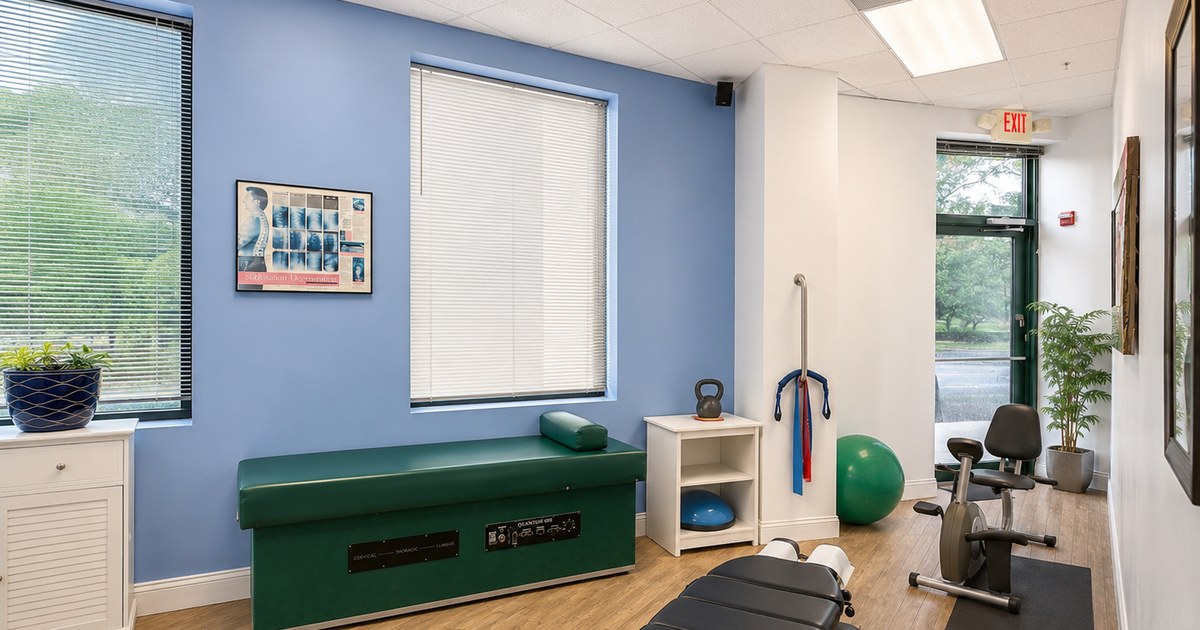
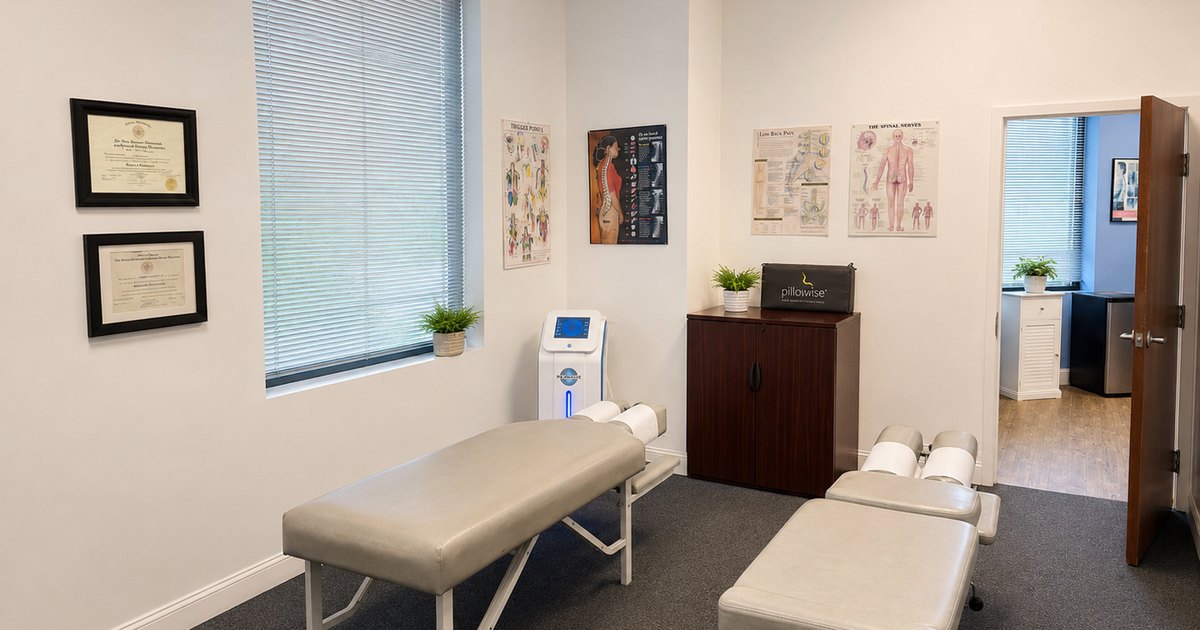
What a sciatica visit looks like at our Edgewater office
Every patient's plan is different, but here's the general shape of how we approach it at Maryland Chiropractic & Physical Medicine.
A real evaluation first
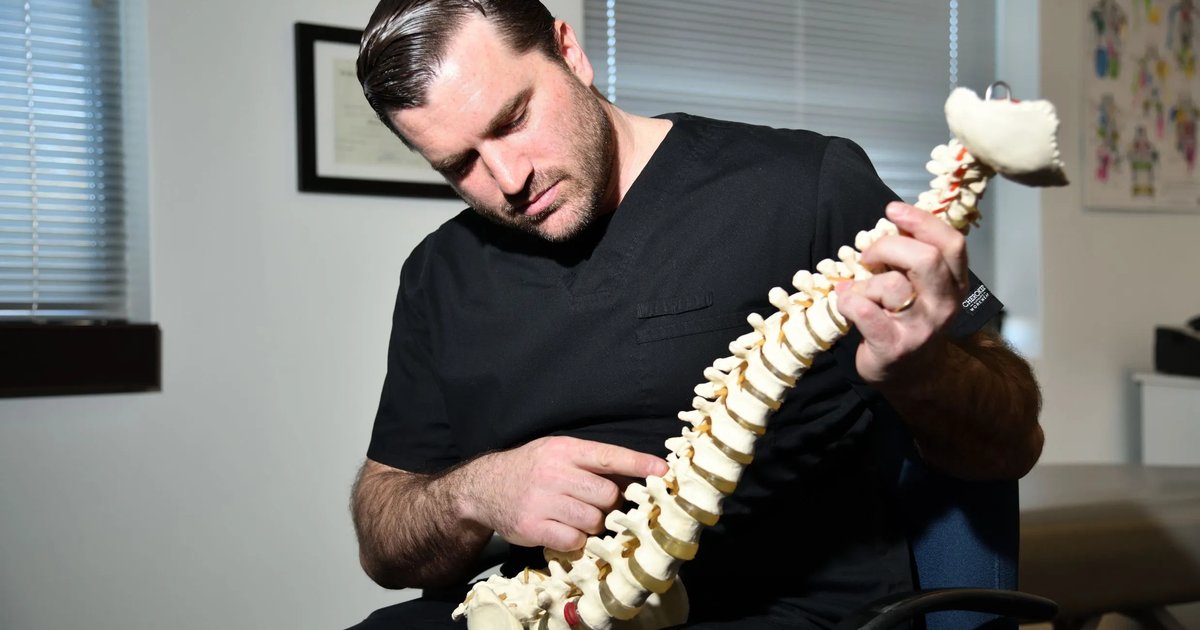
We start with a detailed history: when it started, what makes it better or worse, whether it's changing, and what else is going on with your health. Then a hands-on exam, including:
- Spinal range of motion and joint movement testing
- Neurological screening: reflexes, sensation, and muscle strength in both legs
- Specific tests that stretch or load the nerve to help locate the source
- Hip and sacroiliac assessment to rule out look-alikes
Imaging isn't automatic. X-rays or an MRI make sense when the history or exam raises a specific question they'd answer, or when symptoms aren't following the expected course. If you need a referral to a medical provider for imaging or co-management, we'll tell you.
Adjustments and mobilization
When appropriate, we use spinal adjustments and gentler mobilization to restore movement to stiff segments in the lower back and pelvis. Not every patient with sciatica is a candidate for every technique. With an acutely irritated nerve, we often start gentler and progress as things calm down.
Soft tissue work
The muscles around an irritated nerve tend to guard hard. Our massage therapy and cupping services are designed to reduce that protective tension, which can make you more comfortable and make movement easier to tolerate.
Movement you can do at home
This is the part that tends to decide whether results last. We'll give you a short set of exercises matched to your presentation. Some people with disc-related sciatica respond to specific directional movements. Others need gentle nerve mobility work or hip and core strengthening. Walking, in tolerable doses, is usually encouraged. Prolonged bed rest usually isn't.
Where PulseWave fits (and where it doesn't)
Patients sometimes ask about our PulseWave shock wave therapy. PulseWave delivers focused acoustic waves into targeted soft tissue and is designed to stimulate the body's natural healing response in stubborn tendon and muscle problems. It is not a primary approach for a compressed nerve root. That said, sciatica often comes with secondary issues, like a chronically irritated hamstring attachment or gluteal tendon, and in those cases we may discuss whether PulseWave makes sense as part of the broader plan.
Red flags: when to skip the chiropractor and get emergency care
This section matters more than anything else in this article.
A rare condition called cauda equina syndrome happens when the bundle of nerve roots at the bottom of the spinal canal is severely compressed. The American Academy of Orthopaedic Surgeons describes it as a surgical emergency. Go to the emergency department right away if you have back or leg pain along with any of the following:
- New trouble urinating, being unable to urinate, or new loss of bladder or bowel control
- Numbness in the "saddle" area: groin, genitals, inner thighs, or around the buttocks
- Sciatica symptoms in both legs
- Rapidly worsening leg weakness, such as a foot that suddenly drags or slaps when you walk
You should also see a medical provider promptly if your back and leg pain follows significant trauma, comes with fever or unexplained weight loss, or if you have a history of cancer.
Small things that can help right now
While you're getting evaluated, a few simple habits often make the day more tolerable:
- Break up sitting. Stand and walk for a minute or two every 20 to 30 minutes. A timer helps.
- Keep walking. Short, frequent walks usually beat one long one. Stop before pain spikes.
- Watch how you get up. Scoot to the edge of the chair, keep your back relatively neutral, and push through your legs.
- Sleep with support. On your side with a pillow between the knees, or on your back with a pillow under them.
- Don't force stretches that make leg symptoms worse. Aggressive hamstring stretching can irritate an already-sensitive nerve. If a stretch sends pain farther down your leg, stop.
A useful rule of thumb: pain that moves back toward your spine is usually a good sign. Pain that spreads farther down the leg is a signal to back off and get checked.
Frequently asked questions
How long does sciatica last?
It varies widely. Some episodes settle within weeks. Others linger or recur. The cause, your overall health, and how active you're able to stay all play a role. If you're not seeing progress after a few weeks, it's worth getting evaluated rather than waiting it out.
Can a chiropractor help a herniated disc?
A chiropractor can't push a disc back into place, and you should be skeptical of anyone who claims to. What chiropractic care aims to do is restore movement, reduce muscle guarding, and help you find positions and exercises that calm the irritated nerve while your body recovers. Research on manipulation for disc-related sciatica is limited but growing, and individual results may vary.
Is it safe to get adjusted with sciatica?
For most people, yes, after a proper evaluation. The NCCIH notes that mild, temporary soreness or stiffness is common after spinal manipulation and usually resolves within about a day, while serious complications are very rare. That's exactly why we screen for red flags and neurological changes before any hands-on care, and why we adapt technique to how irritated the nerve is.
Do I need an MRI first?
Not usually. Most sciatica can be assessed through history and physical exam. Imaging becomes appropriate when there are red flags, significant or progressing weakness, or symptoms that don't improve as expected with conservative care. We'll refer you if it's indicated.
Should I use ice or heat?
Either can be reasonable. Many people prefer ice in the first few days of a flare and heat for muscle tightness afterward. Use whichever makes you more comfortable, 15 to 20 minutes at a time, with a barrier between your skin and the pack.
What if I was in a car accident?
Sciatica after an auto accident needs careful documentation and a thorough exam. We see many personal injury patients from around Anne Arundel County, and the conditions page has more on how we approach post-accident care.
Do you take my insurance?
We work with a range of plans and also offer self-pay options. The financing page covers the details, or you can call and we'll verify your coverage before your first visit.
Where are you located?
We're at 137 Mitchell's Chance Road, Suite 100, Edgewater, MD 21037, just over the South River from Annapolis and an easy drive from Davidsonville, Riva, Mayo, Crownsville, Severna Park, and Arnold. Call us at (443) 294-6873.
Office hours are Monday and Thursday 8:30–12:30 and 2:30–6:30, Tuesday 8:30–12 and 2–4, Wednesday 8:30–2, and Friday 8:30–2:30.
Getting started
If leg pain has been interfering with how you sit, sleep, or work, you don't have to keep guessing. A proper evaluation can tell you what's likely driving it, whether conservative care is a good fit, and whether you need to see someone else first.
You can learn more about our practice, browse the full list of services, or contact us to schedule. If you'd also like to discuss PulseWave for a related tendon or soft-tissue issue, you can book a PulseWave consultation here.
This article is provided for general educational purposes only and does not constitute medical advice, diagnosis, or treatment. It is not a substitute for an evaluation by a qualified healthcare provider. Chiropractic care and the therapies described above are not represented as cures for any condition, and individual results may vary. If you have loss of bladder or bowel control, numbness in the groin or saddle area, symptoms in both legs, or rapidly progressing weakness, seek emergency medical care immediately.