If you live in Edgewater, MD and a doctor, an MRI report, or a well-meaning friend has used the words "bulging disc" or "herniated disc," you may have walked away more confused than informed. Are they the same thing? Is one worse? Do you need surgery? Across Anne Arundel County, these are some of the most common questions we hear at our office on Mitchell's Chance Road.
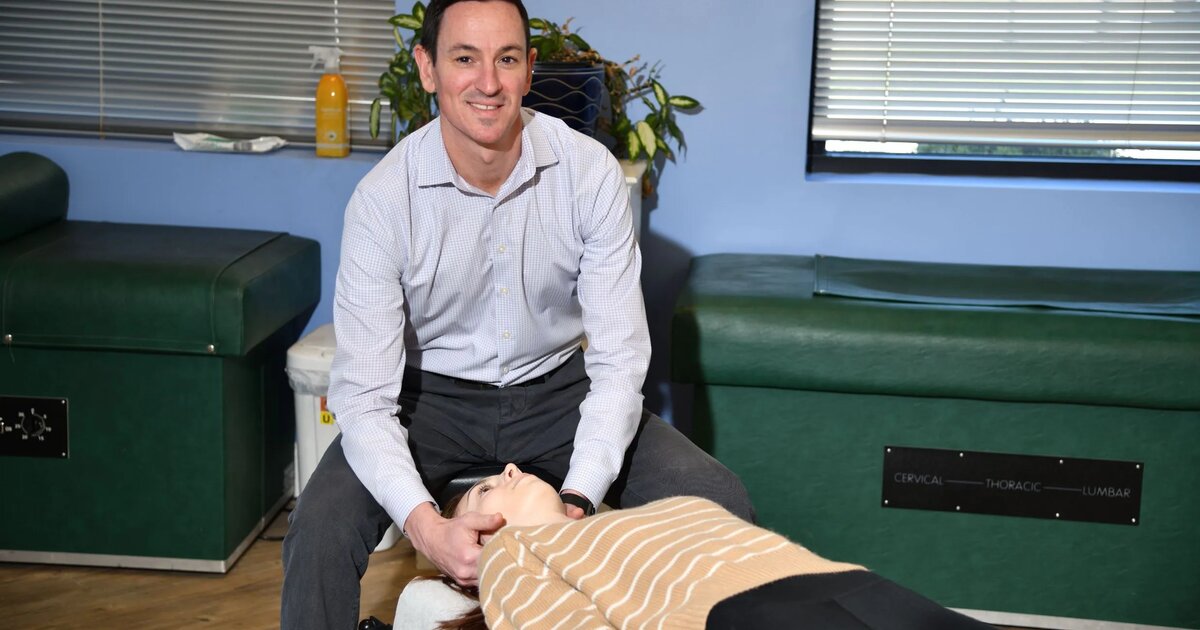
I'm Dr. Derek Curran. This article explains in plain language how a bulging disc differs from a herniated disc, what symptoms people commonly report, what the published research says about conservative (non-surgical) care, and how we approach these concerns at Maryland Chiropractic & Physical Medicine.
First, What Is a Spinal Disc?
Between each of the bones in your spine (the vertebrae) sits a disc. Think of a disc as a small shock absorber with two parts: a tough, layered outer ring (the annulus) and a softer, gel-like center (the nucleus). Together they allow your spine to bend, twist, and absorb load while spacing the vertebrae so nearby nerves have room.
Discs can be affected by age, repetitive loading, awkward lifting, prolonged sitting, and sometimes a sudden event such as a fall or a car accident. Over time, the discs naturally lose some water content, which is one reason disc findings are so common on imaging, even in people with no pain at all.
Bulging Disc vs. Herniated Disc: The Core Difference
Here is the simplest way to picture it.
A Bulging Disc
In a bulging disc, the outer ring stays intact, but the disc extends outward past its normal boundary, a bit like a tire that sags at the sidewall. The bulge is often broad and may involve a large part of the disc's circumference.
A Herniated Disc
In a herniated disc (sometimes called a "slipped disc," though discs don't actually slip), the outer ring has a tear or weak spot, and some of the inner material pushes through it. The protrusion is usually more focal, meaning it sticks out in one specific spot, and it has a greater chance of coming into contact with a nearby nerve root.
Why the Labels Matter Less Than You Think
Radiology reports use several overlapping terms: bulge, protrusion, extrusion, herniation. The label alone does not tell you how much pain a person has or what care is appropriate. Plenty of people have a bulging or even herniated disc on an MRI and feel fine, while others with modest findings are very uncomfortable. That is why a hands-on examination and your history matter as much as the image.
Common Symptoms People Report
Symptoms vary a great deal depending on which disc is involved and whether a nearby nerve is irritated. People commonly describe:
- Localized low back or neck pain that may worsen with bending, sitting, coughing, or sneezing
- Pain that travels into a buttock, leg, shoulder, or arm
- Numbness, tingling, or a "pins and needles" sensation in the affected limb
- Muscle tightness or spasm around the area
- A sense of weakness in a leg, foot, or hand
Many cases of low back pain with leg symptoms, often called sciatica, are associated with irritation of a nerve root near a lumbar disc, although there are other possible causes. You can read more in our article on sciatica and chiropractic care in Edgewater. If your main concern is the neck, our post on tech neck for desk workers may help.
When to Seek Prompt Medical Attention
Most disc-related back pain is not an emergency, but some symptoms are. Go to an emergency room or call 911 right away if you have:
- Loss of bladder or bowel control
- Numbness in the groin or inner thighs ("saddle" numbness)
- Rapidly worsening leg weakness or foot drop
- Severe pain after significant trauma, or with fever, unexplained weight loss, or a history of cancer
These can signal a serious condition that needs urgent evaluation. They are not situations for waiting on an appointment.
What Does the Research Say About Conservative Care?
It helps to know that disc problems have a favorable natural history for many people. A 2023 case report in Cureus on a lumbar disc herniation noted that herniated disc material has a high probability of spontaneous resorption, particularly in more severe cases, and suggested that conservative management for at least six weeks is a reasonable approach before surgery is considered. As a single case report, it is limited evidence, and the authors themselves note that the effectiveness of chiropractic treatment needs further prospective study. Read the case report on PubMed Central.
A prospective cohort study published in the Journal of Manipulative and Physiological Therapeutics followed 148 patients with MRI-confirmed lumbar disc herniations who received chiropractic spinal manipulation, and reported that pain and disability scores improved over a one-year follow-up, with no adverse events reported. Because the study had no control group, its authors are careful to say the improvement cannot be attributed to manipulation alone. See the study summary here.
What can we fairly take from this? Many people with disc-related pain improve with time, and a conservative approach that includes movement-based care is a reasonable first step for appropriate candidates. It does not mean chiropractic care will resolve a disc problem, and it is not a guarantee for any individual. Individual results may vary.
How We Approach Disc-Related Pain in Edgewater
Every visit starts with listening. A typical first visit at our office includes:
- A detailed history. When it started, what makes it better or worse, whether symptoms travel, and any past injuries or accidents.
- A physical examination. Posture, range of motion, orthopedic and neurological screening (reflexes, strength, sensation), and palpation of the muscles and joints involved.
- A conversation about next steps. If your findings suggest something outside our scope, or if imaging or a medical referral makes sense, we say so and coordinate that.
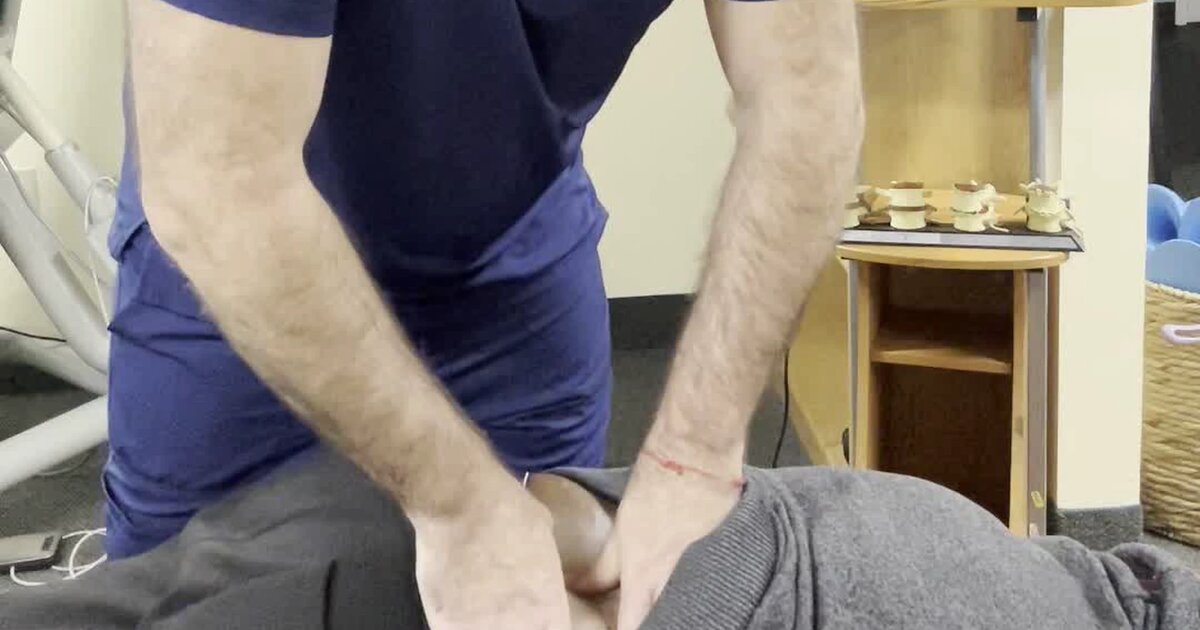
If care at our office is appropriate, it is designed to support the way your spine moves and functions. Depending on your presentation, that may include gentle, low-force techniques rather than high-velocity thrusts, soft-tissue work, and guidance on movement and positions that tend to be more comfortable. We also offer massage therapy and other services that some patients use alongside chiropractic care, and PulseWave focused acoustic wave therapy, which is designed to stimulate the body's natural healing response in soft tissue areas. For the full list of concerns we see, visit our conditions page.
A chiropractic adjustment is not the right tool for every disc situation. If your examination suggests a specific adjustment style would be unwise, we will choose another approach or refer you.
Everyday Habits That May Help Your Back
While you are being evaluated or working on your recovery, a few general habits are commonly suggested:
- Keep moving gently. Short walks are usually better tolerated than extended bed rest. Local favorites like the paths around Davidsonville or a stroll along the South River can be a good place to start, as comfort allows.
- Break up long sitting. If you commute toward Annapolis or sit at a desk, stand and move every 30 to 45 minutes.
- Lift smart. Keep loads close to your body, bend at the hips and knees, and avoid twisting while carrying.
- Sleep position. Many people find a pillow between the knees (side sleeping) or under the knees (back sleeping) more comfortable.
These are general suggestions, not a treatment plan. What is right for you depends on your own evaluation.
Frequently Asked Questions
Is a bulging disc the same as a herniated disc?
No. In a bulging disc the outer ring remains intact while the disc extends outward; in a herniated disc, inner material pushes through a tear or weak spot in the outer ring. The two terms are sometimes used loosely, which is why it helps to have your findings explained in context.
Can a chiropractor help with a herniated disc?
Many people with disc-related pain seek chiropractic care, and research suggests conservative approaches are a reasonable option for appropriate candidates. Whether it is right for you depends on your examination. Individual results may vary, and some situations call for medical referral.
Will I need surgery?
Most people with disc-related pain are first guided toward conservative care. Surgery is generally reserved for specific situations, such as significant or progressive neurological deficits, or symptoms that do not respond to a reasonable trial of conservative care. A surgeon or your medical doctor is the right person to discuss that decision.
Does a disc problem always show up as pain?
No. Disc bulges and herniations are common on MRI in people without symptoms. This is why your symptoms and examination, not just the image, guide decisions.
How do I know if my symptoms are serious?
Loss of bladder or bowel control, saddle numbness, or rapidly worsening weakness need emergency attention. Please go to the nearest emergency room if those occur.
Do you accept patients from outside Edgewater?
Yes. Patients regularly come to us from Annapolis, Severna Park, Davidsonville, Riva, Crownsville, Mayo, Arnold, and throughout Anne Arundel County.
Schedule an Evaluation in Edgewater, MD
If back, neck, or leg symptoms have been lingering, an evaluation is a reasonable way to find out what is going on and what your options are. You can read about our team, see financing options, contact us, or book online.
Maryland Chiropractic & Physical Medicine 137 Mitchell's Chance Road, Suite 100, Edgewater, MD 21037 Phone: (443) 294-6873
Office hours: Mon/Thu 8:30–12:30 & 2:30–6:30 · Tue 8:30–12 & 2–4 · Wed 8:30–2 · Fri 8:30–2:30
#EdgewaterMD #AnneArundelCounty
This article is for educational purposes only and is not medical advice. It is not intended to diagnose, treat, cure, or prevent any condition. Please consult a qualified healthcare provider about your specific situation. Individual results may vary.