If you live in Edgewater, MD, odds are you know someone with a bad back, or you are that someone. Low back pain is among the most common reasons adults across Anne Arundel County make an appointment, whether it started after a weekend of yard work in Davidsonville, a long commute over the South River bridge to Annapolis, or for no reason you can name.
I'm Dr. Derek Curran, and low back pain walks through our door every single day. This article covers what is generally going on, what major guidelines say about non-drug options, and how a chiropractic visit at our Edgewater office is structured, so you can decide what makes sense for you.
Why the Low Back Hurts So Often
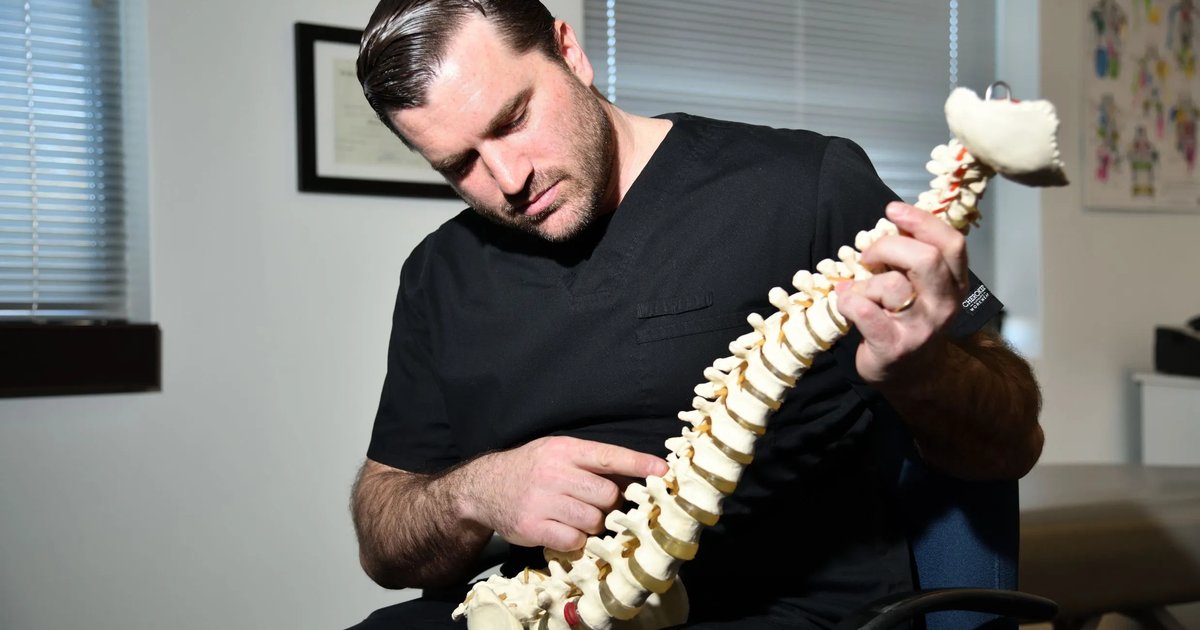
The lower back (the lumbar spine) carries much of your body's load. It sits between the rigid pelvis and the more mobile upper spine, and it is surrounded by muscles, ligaments, discs, and small facet joints that all share the work. When one of those structures is irritated or overloaded, the others often tighten up in response, which is why a "tweaked" back can feel like it hurts everywhere.
Common contributors we see in our Edgewater, Riva, and Severna Park patients include:
- Prolonged sitting. Desk work and long drives keep the hips flexed and the low back loaded in one position for hours.
- Sudden loading. Lifting a kayak, moving furniture, or twisting while carrying groceries.
- Deconditioning. Weak hips and trunk muscles can leave the low back doing work it wasn't built for.
- Prior injury. An old car accident or sports injury that was never fully rehabilitated.
- Stress and poor sleep. Both are associated with muscle tension and a lower tolerance for discomfort.
Most episodes of low back pain improve over time, but they can also come back. That is a big part of why a plan, rather than a one-time fix, tends to matter.
What the Guidelines Say About Non-Drug Care
In 2017 the American College of Physicians published a clinical practice guideline on noninvasive treatments for low back pain. For acute and subacute low back pain, the guideline recommended that clinicians and patients start with non-drug options such as superficial heat, massage, acupuncture, or spinal manipulation. For chronic low back pain, it recommended options including exercise, multidisciplinary rehabilitation, acupuncture, mindfulness-based stress reduction, tai chi, yoga, and spinal manipulation, among others. You can read the summary on PubMed or the American Family Physician overview.
The National Center for Complementary and Integrative Health (part of the NIH) also publishes a plain-language summary of what is known about spinal manipulation, including that it appears to be about as helpful as other commonly used approaches for low back pain, and that serious complications are rare but possible.
Two honest caveats. First, the research does not show that any one approach works for everyone. Second, the benefit seen in studies is typically modest on average, which is why we tailor care to the person in front of us. Individual results may vary.
What a Chiropractic Visit Looks Like
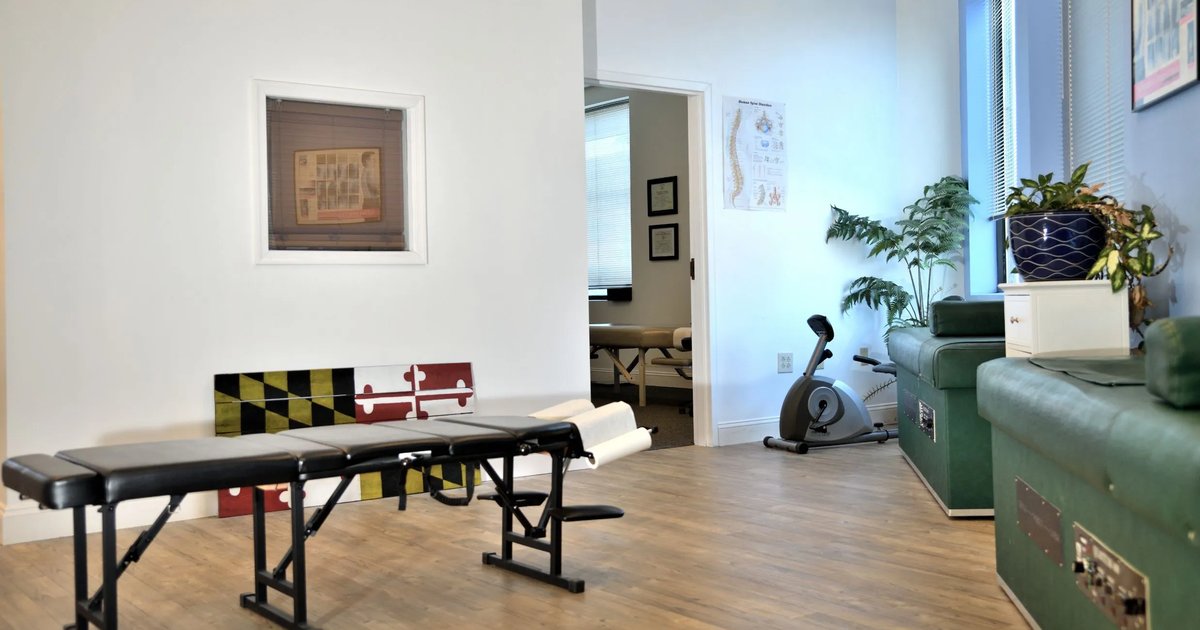
A first visit at Maryland Chiropractic & Physical Medicine is built around understanding your back before doing anything to it.
1. A conversation first
We'll ask when it started, what makes it better or worse, how your work and sleep look, and whether you've had imaging or prior treatment. We also ask about red flags (more on those below).
2. A hands-on examination
We look at how you stand and move, test range of motion, check strength and reflexes, and palpate the muscles and joints of the lumbar spine and pelvis. If something in your history or exam suggests imaging or a referral is appropriate, we'll tell you.
3. A plan explained in plain language
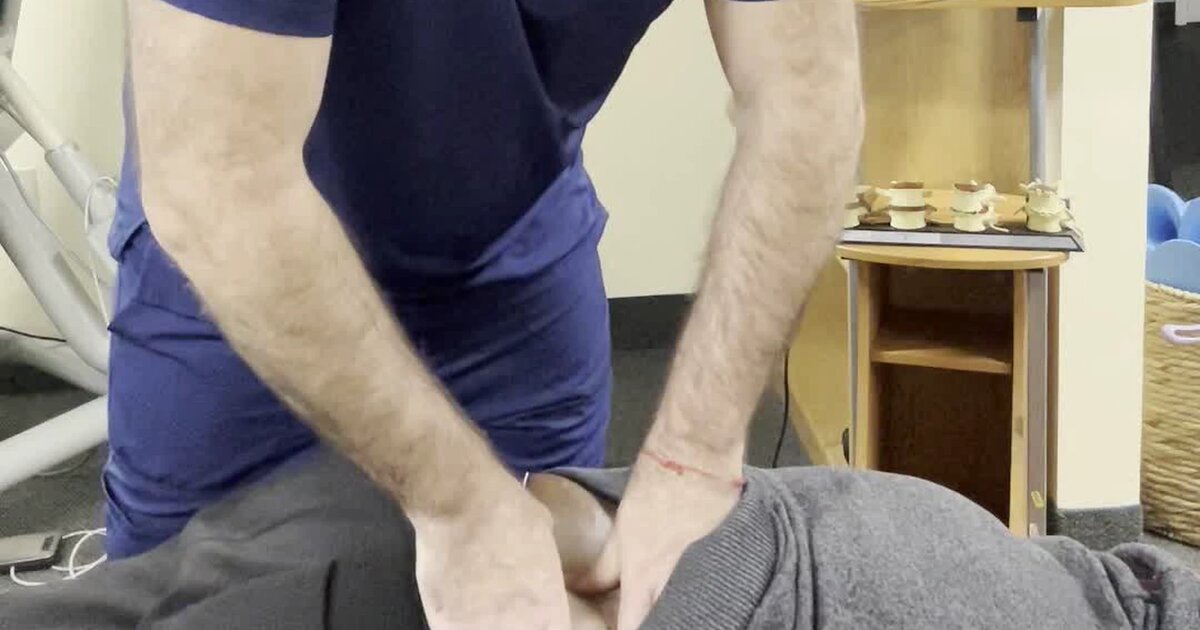
If chiropractic care is a good fit, we'll explain what we found and what we recommend. Depending on you, that may include spinal manipulation (the adjustment), soft tissue work, massage therapy or cupping, and home exercises. The aim is to support your body's natural ability to move comfortably, not to promise a particular outcome.
4. Re-checking along the way
A good plan gets re-evaluated. If you are not trending in the right direction after a reasonable trial, we change the approach or refer you onward.
Adjustments, Soft Tissue Work, and Movement
People often ask which part of care "does the work." In practice, we think of them as pieces of the same picture:
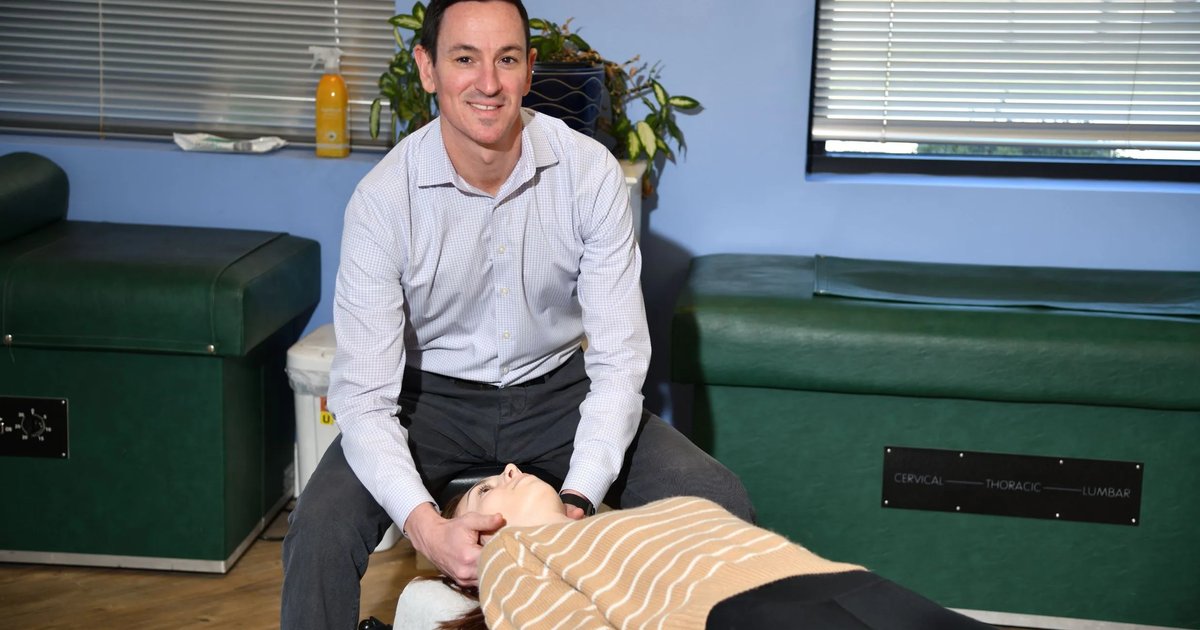
- Spinal manipulation is designed to restore motion to joints that feel stiff or guarded. Many patients describe feeling looser afterward. The "pop" you may hear is gas shifting within the joint fluid and is not a sign of how effective it was.
- Soft tissue therapy targets the muscles that tighten around a sore segment, which may help you tolerate movement sooner.
- Exercise and movement coaching is where lasting change tends to come from. Simple hip and core routines, walking, and breaking up long periods of sitting are often the most underrated part of the plan.
For stubborn, localized soft tissue pain that hasn't responded the way we'd hoped, some patients also explore PulseWave shock wave therapy, which uses focused acoustic waves designed to stimulate the body's natural healing response in the treated area. Whether it is appropriate depends on your exam. Individual results may vary.
Practical Things You Can Do Right Now
These are general, low-risk habits. They are not a substitute for an evaluation:
- Keep moving. Gentle walking is usually better than bed rest for most common low back pain.
- Change positions often. Stand, stretch, or walk for a minute or two every 30 minutes if you sit for work.
- Use heat if it feels good. The ACP guideline lists superficial heat among the options for acute pain.
- Lift with your legs and keep loads close. Avoid twisting while carrying weight.
- Sleep supported. Many people are more comfortable with a pillow under the knees (on the back) or between the knees (on the side).
- Don't ignore recurrence. If it keeps coming back, that's useful information worth having examined.
When Low Back Pain Needs Medical Attention Right Away
Seek urgent care or call 911 if low back pain comes with any of the following:
- Loss of bladder or bowel control
- Numbness in the groin or saddle area
- Progressive leg weakness
- Fever, unexplained weight loss, or a history of cancer
- Severe pain after a fall or significant trauma
- Pain that is constant, severe, and not eased by any position, especially at night
These are not conditions to try to manage with chiropractic care first.
What About Leg Pain, Accidents, and Work Injuries?
If your low back pain travels into the buttock or leg, see our guide on sciatica. If your pain started after a collision, even a minor one, read what to do after a car accident in Edgewater, since delayed symptoms are common. And if you're wondering how long a course of care usually lasts, we cover that in how often you should see a chiropractor.
Frequently Asked Questions
Is chiropractic care safe for low back pain?
For most people with common low back pain, spinal manipulation is considered to have a low risk of serious complications, according to the NIH's NCCIH. Mild, short-lived soreness afterward is the most common side effect. We screen every patient for factors that would make manipulation inappropriate and adjust technique accordingly.
Do I need an X-ray or MRI first?
Not always. Guidelines generally advise against routine imaging for uncomplicated low back pain without red flags. We'll recommend imaging or a referral if your history or examination suggests it's needed.
How many visits will I need?
It depends on how long you've had the problem, how it responds, and your goals. We re-evaluate regularly rather than committing you to a fixed plan up front. Individual results may vary.
Will the adjustment hurt?
Most patients describe it as a brief stretch or pressure, often followed by a feeling of relief. If you're uncomfortable with a particular technique, tell us and we'll use a different approach.
Can I see a chiropractor if I have a disc problem or arthritis?
Often yes, with the technique adapted to your situation. That's something we'd evaluate at your exam before recommending anything.
Do I need a referral?
In general, no. You can call to schedule directly. Check with your insurance plan about coverage; our financing page also explains payment options.
Where are you, and what are your hours?
We're at 137 Mitchell's Chance Road, Suite 100, Edgewater, MD 21037, convenient to Annapolis, Davidsonville, Riva, Crownsville, Mayo, Arnold, and Severna Park. Call (443) 294-6873. Hours: Monday and Thursday 8:30–12:30 and 2:30–6:30, Tuesday 8:30–12 and 2–4, Wednesday 8:30–2, and Friday 8:30–2:30.
Ready to Have Your Back Looked At?
If low back pain has been hanging around longer than you'd like, book a visit or call (443) 294-6873. You can also learn more about Dr. Curran and the practice, see the conditions we see, or send us a message. We're proud to serve Edgewater and the greater Anne Arundel County community. #EdgewaterMD #AnneArundelCounty
This article is provided for general educational purposes only and does not constitute medical advice, diagnosis, or treatment. It is not a substitute for an evaluation by a qualified healthcare provider. Chiropractic care and the therapies described above are not represented as cures for any condition, and individual results may vary. If you are experiencing severe, worsening, or unexplained symptoms, including loss of bladder or bowel control, progressive weakness, or pain following significant trauma, seek prompt medical attention.