If you've never been to a chiropractor, the adjustment can feel like a mystery: a quick movement, a pop, and somehow you walk out standing a little taller. Patients at our Edgewater, MD office often tell me they put off their first visit because of something they heard from a friend, a relative, or a video online.
Most of those worries come from myths. So in this article I'll explain what a chiropractic adjustment actually is, what that popping sound really means, and where the common misconceptions go wrong. Whether you live in Edgewater, Annapolis, Severna Park, Davidsonville, Riva, Crownsville, Mayo, or Arnold, this is the same conversation we have with patients across Anne Arundel County every week.
What is a chiropractic adjustment?
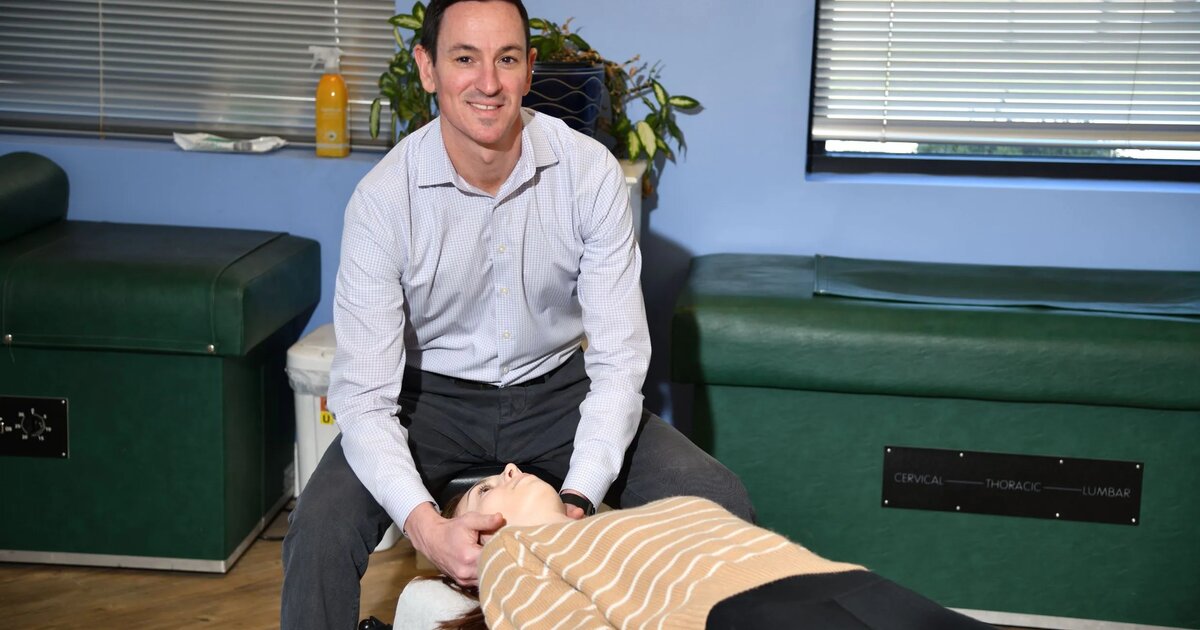
A chiropractic adjustment, also called spinal manipulation or joint manipulation, is a hands-on technique in which a licensed chiropractor applies a controlled, directed force to a joint. According to the Cleveland Clinic, chiropractors use their hands or small instruments to move joints, often with the goal of easing pain and supporting movement. The National Center for Complementary and Integrative Health (NCCIH) at the NIH offers a plain-language overview of spinal manipulation and what the research says.
Adjustments are not one single move. Depending on the patient, the area, and the day, an adjustment can be:
- A quick, low-amplitude thrust applied by hand, the technique most people picture.
- A gentler, non-thrust approach, such as slow mobilization or the use of a handheld instrument, for patients who prefer less force.
- Table-assisted techniques, where part of the table moves to support a specific motion.
At Maryland Chiropractic & Physical Medicine, the technique is chosen for the person on the table, not the other way around. If you're nervous, we'll talk through the options before we begin.
Myth 1: "The popping sound means a bone is being put back in place"
This is probably the most common misunderstanding. The sound is not a bone slipping back into position. The Cleveland Clinic describes it as gas, such as oxygen, nitrogen, and carbon dioxide, released from the joint as it is moved and stretched, similar to cracking your knuckles.
Two practical points follow from that:
- A pop isn't required. Many effective adjustments make no sound at all. A quiet adjustment is not a failed one.
- A louder pop isn't better. The sound reflects gas in the joint fluid, not how well the visit went.
Myth 2: "Adjustments hurt"
Most patients describe the sensation as a brief stretch or pressure, often followed by a feeling of looseness. Some soreness afterward is common. The Cleveland Clinic notes that soreness, tiredness, or a mild headache can follow an adjustment and usually resolve within about 24 hours.
If an area is already irritated, we adapt. That might mean a lighter technique, a different position, or starting with soft-tissue work first. You should never feel pressured to accept a technique you're uncomfortable with. Tell us, and we'll change the approach.
Myth 3: "Chiropractic care isn't safe"
Safety is a fair question, and it deserves a straight answer rather than a sales pitch. For most people, spinal manipulation delivered by a trained, licensed professional is considered to carry a low risk of serious complications. The common effects are the mild, temporary ones described above.
Serious complications are rare, but they have been reported, which is exactly why screening matters. The Cleveland Clinic lists rare but serious events such as herniated discs, cauda equina syndrome, and stroke, and emphasizes that care should come from a licensed professional. That is why your first visit at our Edgewater office begins with a history and examination rather than an adjustment. We look for reasons to modify technique or refer you elsewhere, such as certain neurological signs, recent significant trauma, or symptoms that suggest the problem isn't mechanical. If an adjustment isn't appropriate for you, we'll say so and recommend a different path.
Myth 4: "Once you start, you have to keep going forever"
No one should be locked into a plan they don't understand. How often you come in depends on how long the problem has been present, how your body responds, what's driving it, and what your goals are. Some people come in for a flare-up and then space visits out; others choose periodic visits to stay on top of a recurring issue. We re-evaluate regularly and tell you honestly what we're seeing. Our guide on how often you should see a chiropractor walks through how those decisions are made. Individual results may vary.
Myth 5: "Cracking your joints causes arthritis"
This one is often tied to knuckle cracking. Reviews of the topic, including a roundup from Medical News Today, describe the evidence linking habitual joint cracking to arthritis as weak. Be cautious with this one either way: whether you have arthritis, or are worried about it, is a question for a proper evaluation, not a rule of thumb. Many patients with arthritis are still candidates for gentle, modified care, and we'd assess that at your exam.
Myth 6: "Chiropractors only treat back pain"
Low back pain is a big part of what we see, and our posts on low back pain and sciatica cover that ground. But patients also come to us for neck stiffness, tech neck from desk work, upper back tension, headaches that start in the neck, and aches that follow a car accident. You can see the full range on our conditions page and services page.
Our care also isn't limited to adjustments. Depending on your needs, your visit may include massage therapy, cupping, or PulseWave shock wave therapy, which uses focused acoustic waves designed to stimulate the body's natural healing response in soft-tissue areas. Which of these makes sense for you is decided at your evaluation.
Myth 7: "You need a referral or an X-ray before you can be seen"
In most cases, you can schedule directly with a chiropractor. Check with your insurance plan about coverage rules, and see our financing page for payment information. As for imaging, it isn't automatic. We recommend an X-ray or MRI, or a referral, when your history or exam suggests it would change the plan, not as a routine box to check.
What to expect at your first visit
- A conversation. When did it start, what makes it better or worse, what have you tried, and what do you want to be able to do again?
- An exam. We look at posture, movement, joint motion, muscle tension, and neurological screening where appropriate.
- A clear explanation. We tell you what we found and what we recommend, and answer your questions before anything begins.
- Care that fits. If an adjustment is appropriate, we explain the technique first. You can pause or change course at any point.
When an adjustment is not the right first step
Seek urgent medical attention rather than a chiropractic visit if you have sudden severe headache or neck pain with weakness, vision changes, or trouble speaking, loss of bladder or bowel control, numbness in the groin area, progressive leg weakness, chest pain, or pain after significant trauma. These can signal conditions that need emergency evaluation.
Frequently Asked Questions
Is a chiropractic adjustment safe?
For most people, adjustments from a trained, licensed professional carry a low risk of serious complications, and the common effects are mild and temporary. Rare serious events have been reported, which is why we screen every patient first.
Does the popping sound mean something moved back into place?
No. The sound is generally attributed to gas released within the joint as it is stretched. Adjustments can be effective without any sound.
Will I be sore afterward?
Some people feel mild soreness or tiredness, usually resolving within about a day. Let us know if soreness is more than you expected.
How many visits will I need?
It depends on your situation and how you respond. We re-evaluate along the way rather than committing you to a fixed plan up front. Individual results may vary.
Can I get adjusted if I'm nervous or don't like the "crack"?
Yes. Lower-force and instrument-based approaches exist, and we'll use what you're comfortable with.
Do I need a referral?
Generally no. Call us to schedule directly and check with your insurance about coverage.
Where are you, and what are your hours?
We're at 137 Mitchell's Chance Road, Suite 100, Edgewater, MD 21037, convenient to Annapolis, Davidsonville, Riva, Crownsville, Mayo, Arnold, and Severna Park. Call (443) 294-6873. Hours: Monday and Thursday 8:30–12:30 and 2:30–6:30, Tuesday 8:30–12 and 2–4, Wednesday 8:30–2, and Friday 8:30–2:30.
Have a Question Before Your First Visit?
If something you've heard about chiropractic care has kept you from coming in, ask us. Book a visit or call (443) 294-6873. You can also learn more about Dr. Curran and the practice or send us a message. We're proud to serve Edgewater and the greater Anne Arundel County community. #EdgewaterMD #AnneArundelCounty
This article is provided for general educational purposes only and does not constitute medical advice, diagnosis, or treatment. It is not a substitute for an evaluation by a qualified healthcare provider. Chiropractic care and the therapies described above are not represented as cures for any condition, and individual results may vary. If you are experiencing severe, worsening, or unexplained symptoms, seek prompt medical attention.