A lot of the people who come into our Edgewater, MD office for neck pain mention headaches almost as an afterthought. "Oh, and I get these headaches most afternoons." When we dig in, the headaches are often the thing wearing them down the most: the dull band around the forehead by 3 p.m., the ache that creeps up from the base of the skull, the days they reach for ibuprofen before lunch.
Headaches are one of the most common reasons people across Anne Arundel County look for a chiropractor. But "headache" covers many different problems, and the honest answer to "can a chiropractor help my headaches?" depends on which kind you have. Below, I'll walk through the main headache types we see, what the research actually says about chiropractic care for each, the warning signs that mean you should see a medical doctor today, and what a headache evaluation looks like at Maryland Chiropractic & Physical Medicine.
First: not all headaches are the same
According to MedlinePlus, the National Library of Medicine's consumer health site, serious causes of headaches are rare, and most people can feel better with lifestyle changes, relaxation, and sometimes medicine. But the type of headache matters a great deal when you're deciding what kind of care makes sense.
Tension-type headache
This is the most common headache. It usually feels like a dull, squeezing pressure or a tight band on both sides of the head. It often starts at the back of the head and spreads forward. The neck, shoulders, and jaw often feel tight or sore along with it. Stress, poor sleep, and holding your head in one position for hours (hello, laptop) are frequent contributors.
Cervicogenic headache (a headache that starts in the neck)
"Cervicogenic" means "coming from the cervical spine." In this kind of headache, pain is referred from structures in the neck (joints, discs, muscles) and felt in the head. It's usually one-sided. It often starts at the base of the skull and can wrap toward the temple, forehead, or behind the eye. Clues include:
- The headache gets worse with certain neck movements or sustained postures
- Your neck has reduced range of motion (turning to check a blind spot is harder on one side)
- There's a tender spot at the top of the neck that reproduces the headache when pressed
- There's often a history of neck injury, such as a car accident or whiplash
Migraine
Migraine is a neurological condition, not a neck problem. It typically causes throbbing or pounding pain on one side of the head, often with sensitivity to light or sound, nausea, or visual changes (an "aura"). Movement usually makes it worse. Migraine deserves a proper diagnosis and plan from your primary care doctor or a neurologist. That said, many migraine sufferers also have neck pain and muscle tension, and that is where conservative, hands-on care may play a supporting role.
Other headache types
Cluster headaches, sinus headaches, and "rebound" (medication-overuse) headaches are different again. MedlinePlus notes that people who take pain medicine more than three days a week on a regular basis can develop rebound headaches. If you're reaching for pills most days, that alone is worth a conversation with your doctor.
Why your neck is so often part of the story
A 2026 clinical practice guideline on chiropractic care for headaches (Trager et al., Journal of Integrative and Complementary Medicine) points out how closely neck problems and headaches are linked. Neck pain is reported in about 92% of people with cervicogenic headache and 88% of people with tension-type headache. Tenderness and limited neck motion are common in both.
This makes sense when you look at the anatomy. The nerves that serve the upper three levels of the neck share a relay station in the brainstem with the nerve that serves much of the face and forehead. So irritation in the upper neck can be felt as pain in the head. That's why someone with a stiff upper neck can feel the ache behind their eye.
Here in Edgewater, we see the same patterns again and again:
- Desk and remote workers in Edgewater, Annapolis, and Severna Park who spend eight or more hours looking at screens (we wrote a whole post on tech neck)
- Commuters on Route 2, Route 50, and I-97 who spend long stretches with their shoulders up and their chin forward
- Boaters, anglers, and weekend projects around Mayo, Riva, and the South River: long days of looking down, pulling lines, and sleeping in odd positions
- People recovering from car accidents, where neck injury can bring headaches that show up days or even weeks later
What the research says about chiropractic care for headaches
I want to be careful here, because headache research is mixed and it would be easy to overstate it. Here's an honest summary by headache type.
Cervicogenic headache: the strongest evidence
This is where the evidence is most consistent. An older guideline from the Canadian Chiropractic Association (Bryans et al., 2011, Journal of Manipulative and Physiological Therapeutics) recommended spinal manipulation, joint mobilization, and deep neck flexor exercises for cervicogenic headache, based on moderate-level evidence at the time.
The newer 2026 guideline (Trager et al.) reviewed 31 systematic reviews and one prior guideline. Its panel made a strong recommendation to offer spinal manipulative therapy for cervicogenic headache, based on high-certainty evidence. It also reviewed soft tissue work, mobilization, and therapeutic exercise as part of care.
Even here, not every study is positive. A 2011 review of nine randomized trials (Posadzki & Ernst, Headache) found that most trials favored spinal manipulation. But the one trial with an adequate placebo control showed no benefit beyond placebo. That review called for better-designed studies. This is part of why we pair adjustments with exercise and self-care rather than relying on any single technique.
Tension-type headache: better as part of a combined plan
For tension-type headache, the picture is weaker. The 2011 guideline found that spinal manipulation on its own could not be recommended for episodic tension-type headache. It also found that gentle, low-load craniocervical mobilization exercises may help over the longer term. The 2026 guideline recommends spinal manipulation for tension-type headache only as part of multimodal care. In other words, it should be combined with things like soft tissue work, exercise, and education, not used on its own.
This lines up with what we see clinically. For tension-type headaches, the most useful parts of care are often the "boring" ones. These include massage and soft tissue work for tight neck and shoulder muscles, strengthening the deep neck muscles, changing your workstation, and looking hard at sleep and stress.
Migraine: a supporting role, alongside your physician
The 2011 guideline recommended spinal manipulation and multidisciplinary care that includes massage for migraine, based on moderate-level evidence from a small number of trials. It also noted that the evidence did not go beyond a moderate level and that more research was needed. We take that at face value. Chiropractic care is not a replacement for medical migraine care. For patients whose migraines come with significant neck pain and muscle tension, it may be a reasonable addition to the plan they've built with their doctor. If you have migraines, we'll want to know who's managing them and what medications you take.
Individual results may vary. Headaches have many causes. No one can promise how a specific person's headaches will respond to any form of care.
Warning signs: when to skip the chiropractor and see a doctor now
Most headaches are not dangerous. But some are. Based on MedlinePlus guidance, call 911 or go to the nearest emergency room if:
- Your headache comes on suddenly and is explosive or violent ("the worst headache of my life")
- You have slurred speech, vision changes, weakness or trouble moving your arms or legs, loss of balance, confusion, or memory loss along with the headache
- You have a fever, stiff neck, nausea, and vomiting together with the headache
- The headache follows a head injury
See a medical provider promptly if:
- You've just started getting headaches, especially if you're over 50
- Your headache keeps getting worse over 24 hours
- The pain is severe and in one eye, with redness in that eye
- Your headaches come with vision problems, pain while chewing, or unexplained weight loss
- You have a history of cancer or a weakened immune system and develop a new headache
At our office, screening for these red flags is the first thing we do at a headache visit. If anything in your history or exam points somewhere other than the neck, we'll refer you. That's not a failure of care. It is good care.
What a headache visit looks like at Maryland Chiropractic
When you come in for headaches, here's what to expect.
1. A detailed history
We'll ask when the headaches started, where you feel them, how often they happen, how long they last, what makes them better or worse, and what medications you've tried. If you've kept a headache diary, bring it. MedlinePlus recommends tracking the time of onset, food and drink, sleep, activity, and how long the headache lasted. It's one of the most useful tools we have.
2. A hands-on exam
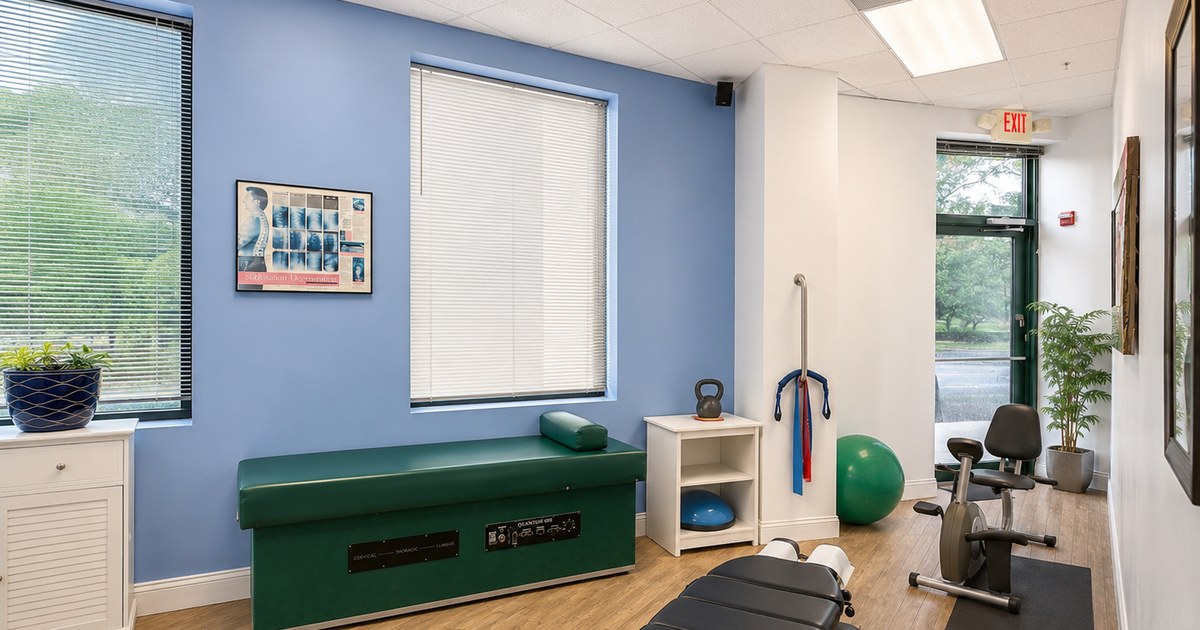
We check neck range of motion, posture, the joints of the upper neck and upper back, muscle tightness in the neck, shoulders, and jaw, and basic neurological function (reflexes, strength, sensation). We're trying to answer one question: is the neck part of this headache? If it isn't, we'll say so.
3. Imaging only when it's needed
Most patients with headaches don't need X-rays or an MRI. The 2026 guideline specifically recommends against routine imaging for patients with already-diagnosed cervicogenic or tension-type headache. If there are red flags or your history suggests something else, we'll order the right study or refer you.
4. A plan that combines approaches
Depending on what we find, care may include:
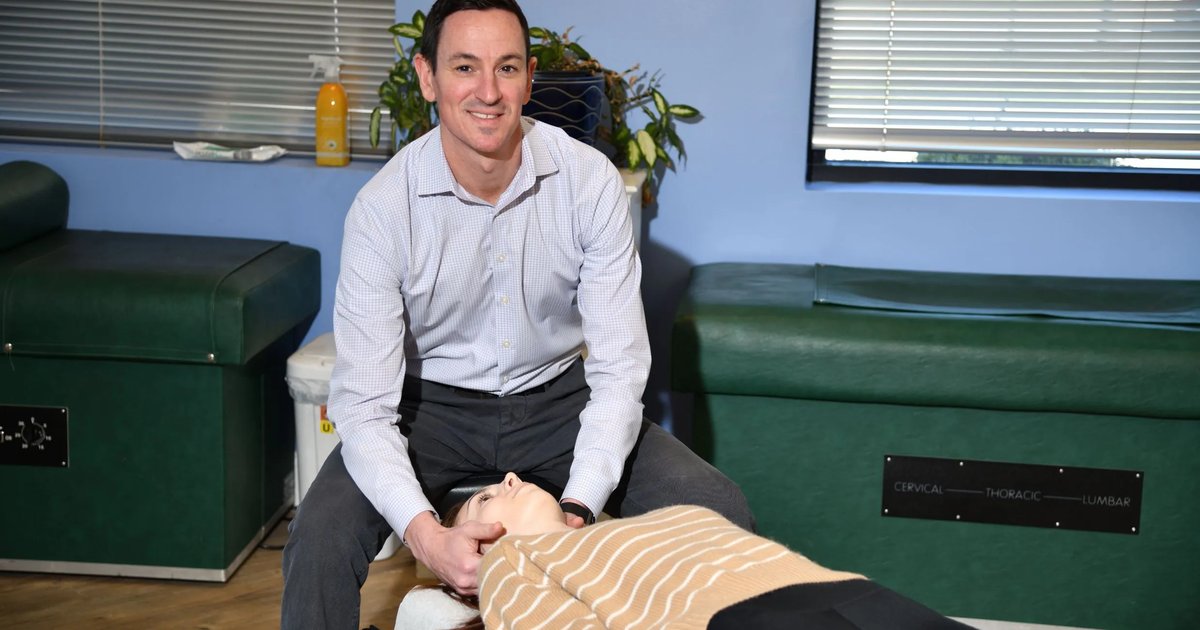
- Chiropractic adjustments to the neck and upper back, using gentle or instrument-assisted techniques when those are a better fit
- Massage therapy and soft tissue work for the muscles of the neck, shoulders, and base of the skull
- Cupping for tight upper-back and shoulder muscles
- Home exercises, especially deep neck flexor strengthening and gentle mobility work
- Workstation and sleep changes: monitor height, phone habits, pillow setup
- Coordination with your physician, especially for migraines or any medication questions
The 2026 guideline describes typical care as one to two visits per week for four weeks to three months, depending on the person and how they respond. We re-check progress regularly. If you're not improving the way we'd expect, we change the plan or refer you rather than simply adding more visits.
Simple things you can start today
While you wait for your visit, a few low-risk habits may help many people with neck-related and tension headaches:
- Raise your screen so the top of the monitor is about eye level, and bring your laptop up off the desk
- Take micro-breaks: every 30 to 45 minutes, stand up, roll your shoulders, and gently turn your head side to side
- Practice the "chin nod": lying on your back, gently nod as if saying "yes" without lifting your head. Hold for a few seconds and repeat 10 times. This starts to wake up the deep neck flexors
- Check your pillow: your neck should stay roughly level with the rest of your spine when you sleep on your side
- Drink water and keep a regular sleep schedule. Dehydration and short sleep are common triggers
- Watch the pain-reliever count: if you're taking something more than three days a week, talk to your doctor about rebound headaches
Frequently asked questions
Can a chiropractor help with headaches?
For headaches that start in the neck (cervicogenic headache), current guidelines support spinal manipulation, and the 2026 chiropractic guideline rates the evidence as high certainty. For tension-type headaches, the evidence supports chiropractic care mainly as part of a combined plan that includes soft tissue work and exercise. For migraine, chiropractic care may play a supporting role alongside your physician. Individual results may vary.
How do I know if my headache is coming from my neck?
Common clues include a one-sided headache that starts at the base of the skull, pain that gets worse with certain neck positions, stiffness when you turn your head, and a history of neck injury. A hands-on exam can help sort this out.
Is it safe to get my neck adjusted if I have headaches?
For most people, chiropractic care is well tolerated. The most common side effects are short-lived soreness or stiffness. Neck manipulation is not right for everyone, though. That's why we screen your history and exam first and use gentler techniques when they're a better fit. If you have certain symptoms (see the warning signs above), we'll refer you to a medical provider instead.
Do I need a referral to see a chiropractor for headaches in Maryland?
No referral is needed to see a chiropractor in Maryland. If you're seeing a neurologist or primary care doctor for headaches, we're happy to coordinate with them.
How many visits will I need?
It depends on the type of headache, how long you've had it, and how you respond. The 2026 guideline describes typical care as one to two visits a week for four weeks to three months. We'll talk through a plan after your exam and re-check your progress along the way.
Will insurance cover chiropractic care for headaches?
Coverage depends on your plan. Call our office and we'll help you check your benefits. We also offer financing options for patients who need them.
Headache care in Edgewater, MD
If you're dealing with frequent headaches, especially ones that seem tied to neck stiffness, desk work, or an old injury, we'd be glad to take a look. Maryland Chiropractic & Physical Medicine serves patients from Edgewater, Annapolis, Davidsonville, Riva, Mayo, Crownsville, Severna Park, Arnold, and across Anne Arundel County.
Maryland Chiropractic & Physical Medicine 137 Mitchell's Chance Road, Suite 100 Edgewater, MD 21037 Phone: (443) 294-6873
Hours:
- Monday & Thursday: 8:30–12:30 and 2:30–6:30
- Tuesday: 8:30–12 and 2–4
- Wednesday: 8:30–2
- Friday: 8:30–2:30
Learn more about our team, browse the conditions we see, or book an appointment online. You can also contact us with questions.
This article is for educational purposes only and is not medical advice. It is not a substitute for diagnosis or treatment from a qualified healthcare provider. Headaches can have many causes, some of them serious. If you have a sudden, severe headache or any of the warning signs listed above, call 911 or seek emergency care right away. Individual results may vary, and no specific outcome is guaranteed.