
If you live in Edgewater, MD, you probably know the feeling: a deep ache, a burning knot, or a tight band sitting right between your shoulder blades. It shows up after a long drive across the Route 50 bridge, after a day hunched over a laptop, or after a weekend of yard work in Anne Arundel County. Sometimes it simply greets you in the morning for no obvious reason.
Pain in that spot is one of the most common complaints we hear at Maryland Chiropractic & Physical Medicine. It is also one of the most misunderstood. The area between the shoulder blades sits over the thoracic spine, the 12 mid-back vertebrae that connect to your ribs. It is a busy intersection of joints, muscles, and nerves, and pain there can have several different sources.
This guide covers the most common causes, the situations where you should get a medical check before anything else, and what a chiropractic evaluation typically looks at.
Why the thoracic spine gets cranky
Your neck and lower back are built to move. Your mid-back is built to be stable. It is anchored by the rib cage, so it moves less, and that stability is what allows your arms to work from a solid base.
That setup has a downside. When the neck and low back are busy compensating for something, or when the shoulders spend hours rounded forward, the muscles between the shoulder blades (the rhomboids, the middle and lower trapezius) end up holding a stretched, sustained load. Stretched muscles that are working all day tend to ache, tighten, and sometimes burn.
The mid-back is also where each rib attaches to the spine through small joints. If one of those joints becomes stiff or irritated, the pain can feel sharp, can catch with a deep breath, or can wrap around toward the side of the ribs.
Common causes of pain between the shoulder blades
Posture and desk work
Forward head posture and rounded shoulders are the most common culprits we see. Every inch your head drifts forward asks the upper back and neck muscles to work harder to keep your eyes level. If that describes your workday, our article on tech neck goes deeper into the pattern.
Muscle strain and overuse
Lifting, reaching, shoveling, painting a ceiling, a new workout routine, or even a long day of holiday decorating can irritate the muscles and fascia around the shoulder blades. This kind of strain often feels better with gentle movement and worse after long periods of sitting still.
Rib and thoracic joint irritation
The joints where the ribs meet the spine can become stiff or irritated, often alongside muscle guarding. People describe this as a "stuck" feeling, pain that changes with breathing or twisting, or a spot they cannot quite reach to stretch.
Neck-related referral
Irritation in the lower neck can send pain into the area between the shoulder blades. If your upper back pain comes with neck stiffness, headaches, or arm symptoms, the neck deserves a look too. We discuss that overlap in our post on chiropractic care for headaches.
Car accidents and falls
Whiplash injuries are not limited to the neck. The thoracic spine and surrounding soft tissue can be involved after a collision, and symptoms sometimes appear days later. If your pain began after a crash, see our guide on delayed whiplash symptoms.
Sleep position, mattress, and stress
Sleeping on your stomach with your head turned, a mattress that has seen better days, or the shoulder tension that comes with a stressful season can all contribute. Stress often shows up first in the upper back and shoulders.
When to get medical attention first
Not all pain between the shoulder blades comes from the spine or muscles. Pain in the back, shoulders, neck, or jaw can also be a warning sign of a heart attack, and the National Heart, Lung, and Blood Institute lists back and shoulder discomfort among possible symptoms, alongside nausea and shortness of breath.
Call 911 or go to the emergency room right away if your upper back pain comes with any of the following:
- Chest pressure, tightness, or pain
- Shortness of breath or trouble breathing
- Sweating, nausea, or lightheadedness
- Pain spreading into the jaw or arm
- Sudden, severe pain unlike anything you have felt before
You should also see a medical provider promptly for upper back pain with fever, unexplained weight loss, a history of cancer, new weakness or numbness in the legs, or loss of bladder or bowel control. These are not situations for a wait-and-see approach, and a good chiropractor will tell you the same thing.
What a chiropractic evaluation looks at
At our Edgewater office, an upper back visit usually starts with a conversation. We want to know when the pain began, what makes it better or worse, what your day looks like, and whether anything else is going on.
From there, an exam commonly includes:
- Posture and movement: How your head, shoulders, and rib cage sit and move together
- Spinal and rib joint motion: Where the thoracic spine moves well and where it feels restricted
- Soft tissue: Muscle tension, trigger points, and tender areas around the shoulder blades
- Neurological screening: Strength, sensation, and reflexes, to rule out nerve involvement
- Imaging, when appropriate: If the history or exam suggests it, we may recommend X-rays or refer you for further testing
The goal is to understand what is driving the pain so that the plan fits you, rather than guessing.
How chiropractic care may help
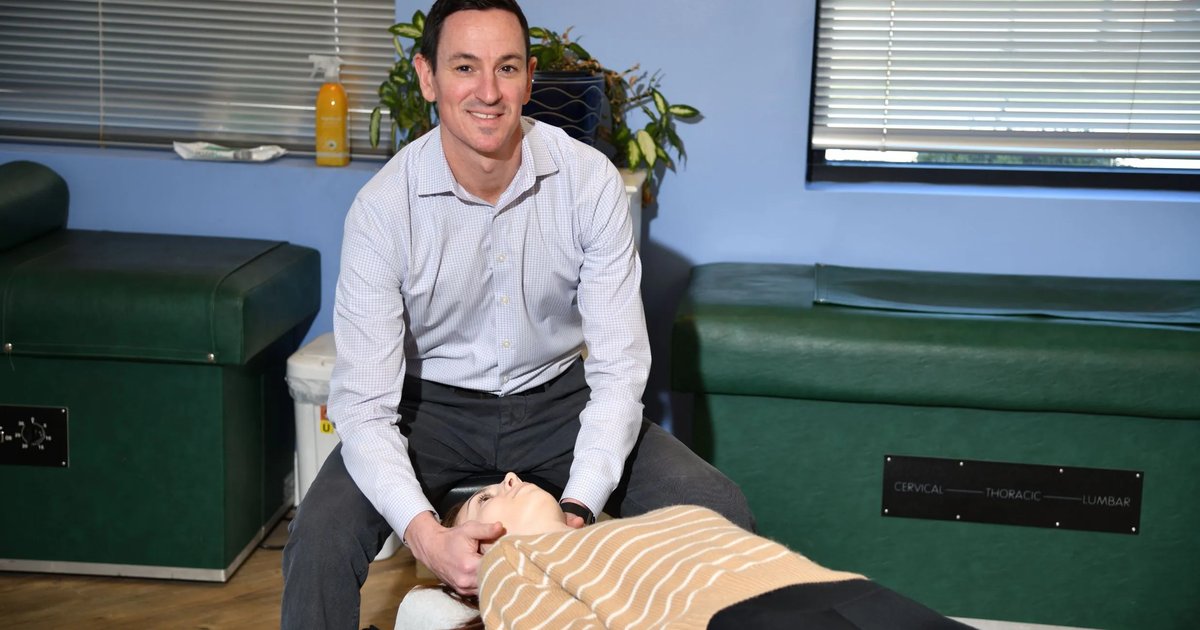
Depending on what the evaluation finds, care for upper back pain may include spinal adjustments, soft tissue work, guided stretching and strengthening, and posture and ergonomic coaching. At Maryland Chiropractic & Physical Medicine, massage therapy and cupping are also available to address muscle tension around the shoulder blades.
It is worth being clear about what the research does and does not show. A 2015 systematic review of thoracic manual therapy for shoulder pain, published in the Journal of Manual & Manipulative Therapy, found that thoracic manual therapy added to usual care was associated with reduced pain and disability in some trials, but the overall quality of the evidence was low, and the authors called for more rigorous studies. A separate randomized trial in the same journal of 88 people with shoulder symptoms found that everyone improved over a short follow-up, with no clear difference between thoracic manipulation and a sham comparison.
In plain terms: the science on mid-back manipulation is still developing, and anyone who promises a guaranteed outcome is overselling. What we can say is that adjustments, soft tissue care, and movement coaching are designed to support normal joint motion and muscle function, and many patients find a combined approach worthwhile. Individual results may vary.
For stubborn, localized soft tissue irritation, PulseWave shock wave therapy is another option we offer. It uses focused acoustic waves intended to support the body's natural healing response, and we discuss whether it makes sense for you during your evaluation.
Simple things you can do between visits
These are general suggestions, not a substitute for an evaluation:
- Change positions often. Set a reminder to stand, roll your shoulders, and walk for a minute every 30 to 45 minutes.
- Raise your screen. The top of your monitor should sit near eye level, with your elbows close to a 90-degree angle.
- Try gentle mid-back movement. Slow shoulder blade squeezes and open-book rotations lying on your side are low-intensity options for many people. Stop if anything increases your pain.
- Mind your driving posture. Sit back fully in the seat, keep the wheel at a comfortable reach, and take breaks on long commutes toward Annapolis or Baltimore.
- Check your sleep setup. Support your head and neck in a neutral position and avoid sleeping with your arm overhead for hours.
Frequently asked questions
Is pain between my shoulder blades serious?
Most of the time it comes from muscles and joints in the upper back, and it improves with time and good care. But because back, shoulder, and jaw pain can sometimes signal a heart problem, pair it with a quick self-check: if you have chest pressure, shortness of breath, sweating, or nausea, seek emergency care immediately.
Why does it hurt when I breathe in?
Pain that changes with breathing often involves the rib joints or the small muscles between the ribs. It can also be a sign of something that needs medical attention, especially if it comes with shortness of breath or chest pain. If breathing pain is new, severe, or does not settle, get it checked.
Can a chiropractor help with upper back pain?
Chiropractors are trained to evaluate the spine, ribs, and surrounding muscles, and care may include adjustments, soft tissue work, and exercise guidance. Research on the thoracic spine is mixed and still developing, and individual results may vary. If your symptoms suggest something outside our scope, we will refer you appropriately.
How many visits will I need?
It depends on the cause, how long the problem has been there, and how your body responds. We build a plan after your evaluation and revisit it as you progress. Our article on how often to see a chiropractor explains how we think about frequency.
Do you take my insurance?
We work with a range of plans and also offer self-pay options. The financing page covers the details, or call the office and we will check your specific coverage before you commit to anything.
Where are you located?
We are at 137 Mitchell's Chance Road, Suite 100, Edgewater, MD 21037, in Anne Arundel County. We are an easy drive from Annapolis, Davidsonville, Riva, Mayo, Crownsville, Severna Park, and Arnold. Phone: (443) 294-6873.
Office hours are Monday and Thursday 8:30 to 12:30 and 2:30 to 6:30, Tuesday 8:30 to 12 and 2 to 4, Wednesday 8:30 to 2, and Friday 8:30 to 2:30.
When to get it looked at
If the ache between your shoulder blades has lasted more than a couple of weeks, keeps coming back, interrupts your sleep, or limits your work or workouts, it is worth having someone assess it properly instead of living with it. See the full list of what we address on our conditions page, learn more about the practice, or get in touch here. To discuss a stubborn problem area, you can also book a PulseWave consultation.
Serving Edgewater, Annapolis, Severna Park, Davidsonville, Riva, Crownsville, Mayo, and Arnold. #EdgewaterMD #AnneArundelCounty
This article is provided for general educational purposes only and does not constitute medical advice, diagnosis, or treatment. It is not a substitute for an evaluation by a qualified healthcare provider. Chiropractic care and the therapies described above are not represented as cures for any condition, and individual results may vary. If you are experiencing chest pain, shortness of breath, or other symptoms of a medical emergency, call 911 immediately.