
The phone call usually comes on a Tuesday or a Wednesday. Someone was rear-ended over the weekend, maybe at the light on Route 2 in Edgewater, MD, or in stop-and-go traffic on Route 50 heading into Annapolis. At the scene they felt shaken but okay. They exchanged insurance information, drove home, and told everyone they were fine.
Then, a day or two later, they woke up and couldn't turn their head to check the blind spot.
That pattern is so common in our office that we've stopped being surprised by it. Delayed whiplash symptoms are real, they're well described in the medical literature, and they're one of the main reasons we tell people across Anne Arundel County the same thing after any collision: feeling fine at the scene doesn't tell you much. Below, I'll explain why symptoms often show up late, what to watch for in the days after a crash, the warning signs that mean you need an emergency room instead of a chiropractor, and what a post-accident evaluation looks like at our office.
Car accidents are common here
It's worth putting some numbers on this. According to the Maryland Highway Safety Office, Anne Arundel County recorded 9,636 reported crashes in 2023, and 2,791 of those were injury crashes. Statewide, more than 41,000 people were reported injured in crashes that year (Maryland Department of Transportation, Highway Safety Office crash summary).
Most of those crashes aren't dramatic. They're parking-lot bumps, low-speed rear-end collisions, and someone sliding into an intersection on a wet morning. Those are exactly the kinds of collisions where people are most likely to shrug off an injury because the damage to the car looked minor.
What whiplash actually is
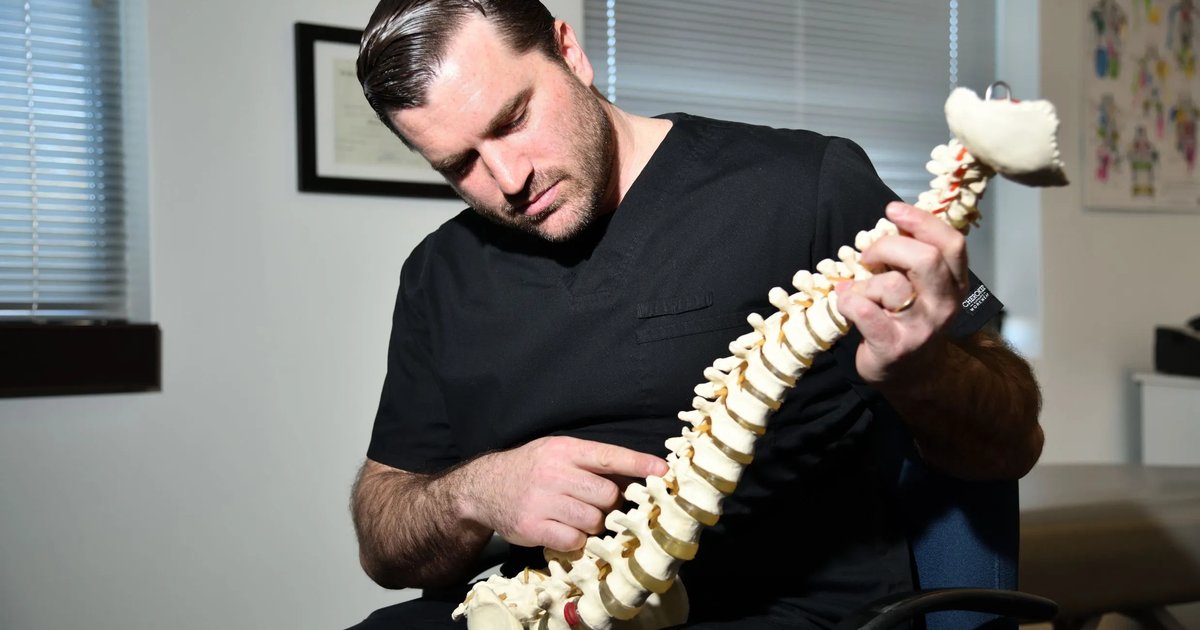
Whiplash is a neck injury caused by a sudden, forceful back-and-forth movement of the head. Cleveland Clinic describes it as a form of neck (cervical) sprain that happens when "sudden force or movement strains your neck and spine," and notes that it can involve muscles, ligaments, nerves and, in severe cases, bone (Cleveland Clinic).
Rear-end collisions are the classic cause, but it can also happen from side impacts, falls, contact sports, and even amusement-park rides. In a rear-end collision, your torso is pushed forward by the seat while your head briefly lags behind, then snaps forward. That whole sequence happens in a fraction of a second, which is far faster than your neck muscles can react to protect the joints and ligaments.
Researchers and clinicians often use the broader term whiplash-associated disorders (WAD), because the effects aren't always limited to neck pain. They can include headaches, shoulder and upper-back pain, arm symptoms, dizziness, and jaw pain.
Why whiplash symptoms are often delayed
This is the part that surprises people. Cleveland Clinic notes that some whiplash symptoms begin right after a crash, while "others take at least 12 hours to appear," and it can take a full day or even a few days for all the symptoms to show up (Cleveland Clinic).
A few things are likely contributing to that delay:
- Adrenaline and stress hormones. A crash is a jolt to your whole nervous system. In the minutes and hours afterward, the stress response can blunt your awareness of pain. Once things calm down, you start to notice what hurts.
- Inflammation takes time to build. Strained soft tissues don't swell and stiffen instantly. The inflammatory response tends to develop over hours, which is why many people feel worst on the second or third morning.
- Muscle guarding. As injured tissues become irritated, surrounding muscles tighten to protect the area. That guarding is often what turns "a little sore" into "I can't turn my head."
- Distraction. After a crash, you're dealing with police reports, insurance calls, a rental car, and a disrupted schedule. It's easy to ignore a mild ache until it becomes impossible to ignore.
Delayed whiplash symptoms to watch for
In the days after a collision, pay attention to anything new or unusual, even if it seems minor. Common delayed whiplash symptoms include:
- Neck pain and stiffness, especially reduced ability to turn or tilt your head
- Headaches, often starting at the base of the skull
- Pain spreading into the shoulders, upper back, or between the shoulder blades
- Tingling, numbness, or a pins-and-needles feeling in the shoulders or arms
- Muscle spasms that make it hard to move your head
- Dizziness
- Jaw pain or clicking
- Fatigue and poor sleep
- Trouble concentrating or feeling "foggy"
That last group matters. Several of these overlap with concussion symptoms. The CDC notes that some concussion symptoms "may appear right away, while others may not appear for hours or days after the injury," and lists headaches, dizziness, vision problems, concentration problems, and sleep changes among them (CDC). You don't have to hit your head for the brain to be jostled in a crash, so if your symptoms lean toward the thinking-and-sleeping side, tell whoever evaluates you.
When to skip the chiropractor and go to the ER
Before anything else: a chiropractic office is not the right first stop for every post-accident symptom. The CDC lists danger signs that call for emergency care right away (CDC). Call 9-1-1 or go to the nearest emergency department if you or someone you're with has any of the following after a crash:
- A headache that gets worse and doesn't go away
- Weakness, numbness, or decreased coordination
- Repeated vomiting
- Slurred speech or unusual behavior
- One pupil larger than the other
- Confusion, restlessness, agitation, or trouble recognizing people or places
- Loss of consciousness, severe drowsiness, or can't be woken up
Also go to the ER for severe neck pain right after a high-speed or high-impact crash, midline neck tenderness, or new weakness or numbness in the arms or legs. These can point to a fracture or spinal cord involvement that needs imaging and medical management first. When we see any of these signs in our office, we refer out immediately.
Why getting checked early matters
If most whiplash injuries are minor and improve on their own, why bother getting evaluated? A few reasons.
Recovery varies a lot from person to person. In a large population-based study of 2,627 people with whiplash injuries from motor vehicle crashes in Québec, the median recovery time was 32 days, but 12% of people still hadn't recovered after six months (Suissa et al., European Spine Journal, 2001). The same study found that certain early signs, including neck tenderness to touch, muscle pain, pain or numbness radiating into the arms or shoulders, and headache, were associated with slower recovery, along with older age and female sex. Knowing whether you have those early signs is useful information.
An exam can catch things you'd miss. A proper evaluation looks at range of motion, muscle tenderness, reflexes, strength, and sensation. Subtle neurological changes are easy to overlook on your own.
It gives you a clear starting point. A thorough first exam records what you're experiencing, what the exam shows, and how your symptoms change over time. That record helps guide your care and gives your other providers a baseline. If you're also dealing with an insurance claim, your insurer or attorney may ask for records, but those decisions are theirs to advise on, not ours.
Waiting can make things harder. People who avoid moving because it hurts often get stiffer, which can make it hurt more. Early guidance on what's safe to do is often as valuable as any hands-on care.
What a post-accident visit looks like at our Edgewater office
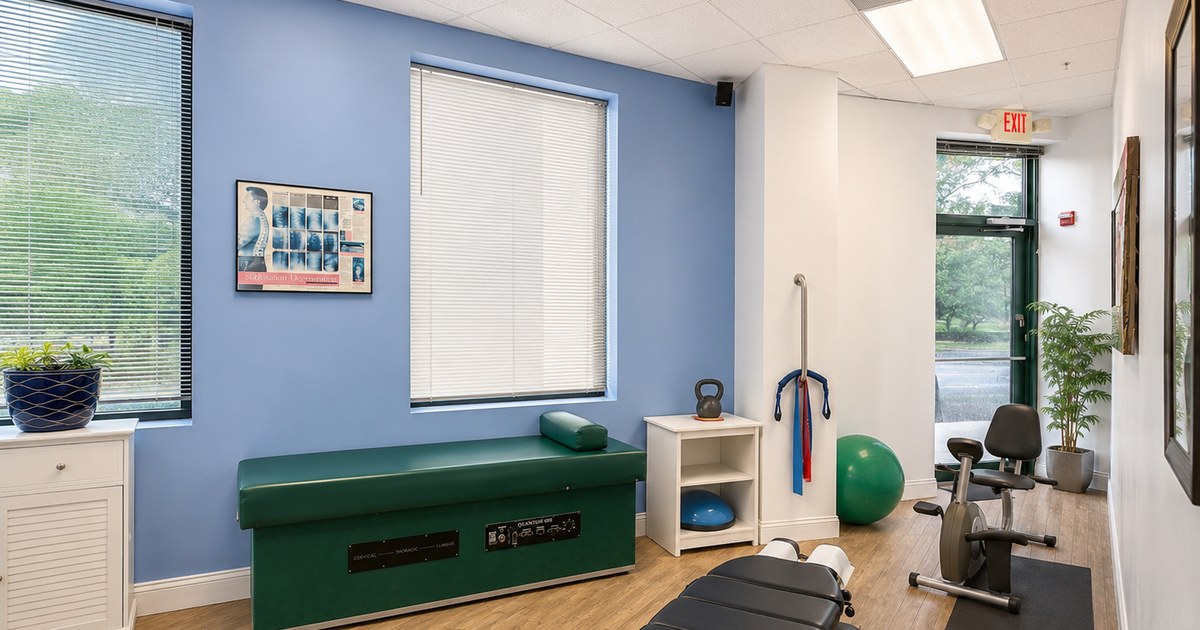
When you come in after a car accident, here's what to expect at Maryland Chiropractic & Physical Medicine:
A detailed history
We'll ask about the crash itself: where you were sitting, which direction the impact came from, whether you were braced or turned, whether your head hit anything, and whether the airbags deployed. Then we'll go through every symptom you've noticed since, including the ones that seem unrelated.
A physical and neurological exam
We check how your neck and back move, where you're tender, and how your nerves are working through reflex, strength, and sensation testing. We screen for red flags and concussion symptoms. If anything suggests you need imaging or a medical referral, we'll tell you and help you get it.
A plan that fits the injury
If you're a good fit for conservative care, the plan is built around your exam, not a template. Depending on what we find, it may include:
- Gentle chiropractic adjustments or lower-force techniques when tissues are irritated
- Soft-tissue work such as massage therapy, myofascial release, or trigger point therapy
- Therapeutic exercise and stretching to restore movement and build support
- Home guidance on ice, heat, activity, sleep position, and workstation setup
You can see our full list of services and the conditions we commonly see. Chiropractic care for whiplash is designed to support the body's natural recovery by restoring motion and calming muscle guarding. It isn't a promise of a specific outcome, and individual results may vary.
Where PulseWave fits (and where it doesn't)
Some patients ask about PulseWave, our shock wave therapy. PulseWave delivers focused acoustic waves designed to stimulate the body's natural healing response in soft tissue. It's mainly used for tendon and soft-tissue problems that have lingered, not as a first-line approach for a fresh neck sprain. If you have a stubborn shoulder or tendon problem weeks or months after a crash, it's worth a conversation. You can learn more about PulseWave here.
What you can do in the first few days
While you're arranging an evaluation, a few simple steps can help:
- Write down your symptoms and when they started. Note anything new each day. Delayed symptoms are easy to forget later.
- Keep moving gently within comfort. Complete rest is rarely helpful for a neck sprain. Slow, comfortable movement usually beats keeping your neck rigid.
- Use ice or heat, whichever feels better. Cleveland Clinic notes that hot or cold packs are commonly used during the first week to 10 days (Cleveland Clinic). Use a barrier between the pack and your skin and limit sessions to 15 to 20 minutes.
- Watch for the danger signs above. If any appear, go to the ER.
- Keep your paperwork together. Hold on to the police report number, your claim number, and any visit summaries.
Frequently asked questions
How long after a car accident can whiplash symptoms appear?
Some symptoms show up immediately, but many take at least 12 hours, and it can take a few days for the full picture to appear. If you develop new neck pain, headaches, or arm symptoms within the first several days after a crash, it's reasonable to connect them to the accident and get checked.
I feel fine. Do I really need to be seen?
You don't have to, but it's a good idea, especially after a rear-end collision. A baseline exam takes little time and gives you a clear reference point if symptoms show up later. If you're completely symptom-free, the exam will tell you that too.
Can a low-speed crash cause whiplash?
Yes. Vehicle damage isn't a reliable measure of what happened to your neck. Modern bumpers are designed to absorb impact without much visible damage, and people in low-speed collisions still report whiplash symptoms.
How long does whiplash take to heal?
Most people improve within days to a few weeks. In the Québec cohort mentioned above, median recovery was about a month, but a meaningful minority still had symptoms at six months. Your timeline depends on the injury and on you. Individual results may vary.
Should I see my primary care doctor or a chiropractor first?
If you have any of the emergency danger signs, go to the ER first. Otherwise, either is reasonable. We work alongside medical providers and refer out whenever an exam suggests it's needed.
Do you work with auto insurance?
We see many personal injury patients and can help you understand how your coverage may apply to your visits. Call us and we'll walk you through it, or visit our financing page for self-pay options. For questions about your claim itself, talk to your insurer or an attorney.
Do I need a referral?
In most cases, no. You can call us directly to schedule an evaluation.
Where is your office?
We're at 137 Mitchell's Chance Road, Suite 100, Edgewater, MD 21037, just across the South River from Annapolis. We're an easy drive from Riva, Davidsonville, Mayo, Crownsville, Arnold, and Severna Park. Call (443) 294-6873.
Office hours are Monday and Thursday 8:30–12:30 and 2:30–6:30, Tuesday 8:30–12 and 2–4, Wednesday 8:30–2, and Friday 8:30–2:30.
Getting checked after a crash
If you've been in a car accident recently, even a minor one, and something doesn't feel right, don't wait to see whether it sorts itself out. An evaluation can tell you what's going on, whether conservative care makes sense, and whether you need to see someone else first.
You can read more about Dr. Curran and our team, look through our services, or contact us to schedule a post-accident evaluation. If a lingering tendon or soft-tissue problem is what brought you here, you can also book a PulseWave consultation.
This article is for general educational purposes only and does not constitute medical or legal advice, diagnosis, or treatment. It is not a substitute for an evaluation by a qualified healthcare provider. Chiropractic care and the therapies described above are not represented as cures for any condition, and individual results may vary. If you have any of the emergency warning signs listed above after an accident, call 9-1-1 or go to the nearest emergency department immediately. For questions about insurance claims or legal matters, consult your insurer or a licensed attorney.