It's one of the first questions people ask us after they've been in a collision: "How long is this going to take?" If you live in Edgewater, MD, or anywhere around Anne Arundel County, you may have been rear-ended on Route 2, bumped in a parking lot near Annapolis, or caught in a slow-speed crash on Route 214. You want to feel like yourself again, and you want to know when you can stop thinking about it.
I wish there were a single number I could give you. There isn't. Anyone who promises you a fixed number of visits before examining you is guessing. What I can do is explain how post-accident care is usually structured, what tends to lengthen or shorten the timeline, and what you can do to take an active role in it. That way you can ask better questions at your own appointments, whether they're with us or with another provider.
Why there's no one-size-fits-all answer
Two people can be in what looks like the same crash and have very different experiences. Age, general health, prior neck or back problems, body position at impact, whether you were braced, how your headrest was set, and even how much stress you're under can all play a role. Soft tissues such as muscles, ligaments, and the small joints of the spine respond differently from person to person.
The research reflects this. The landmark Québec Task Force on Whiplash-Associated Disorders redefined how whiplash is described and managed, and later work, including a systematic review of the prognosis of acute whiplash, has examined how widely recovery courses vary after a collision. A systematic review and meta-analysis has also looked at the relationship between motor vehicle collision exposure and future back pain. The takeaway for patients is simple: some people feel better within weeks, and others have symptoms that linger. Individual results may vary.
How post-accident care is usually structured
At our office, care after a collision generally follows a few phases. This is a framework, not a promise, and your plan is built around your exam findings.
Phase 1: Evaluation and early care
The first visit is about understanding what happened and what your body is doing now. We take a detailed history, ask about the mechanism of the crash, and perform an orthopedic and neurological exam. If something in your presentation suggests you need imaging or a medical referral, we'll tell you. Early visits tend to be closer together, because this is when pain, stiffness, and guarding are typically most noticeable.
If you haven't read it yet, our guide on what to do after a car accident in Edgewater walks through the first hours and days, and our article on delayed whiplash symptoms explains why feeling fine at the scene isn't the whole story.
Phase 2: Active care and gradual spacing
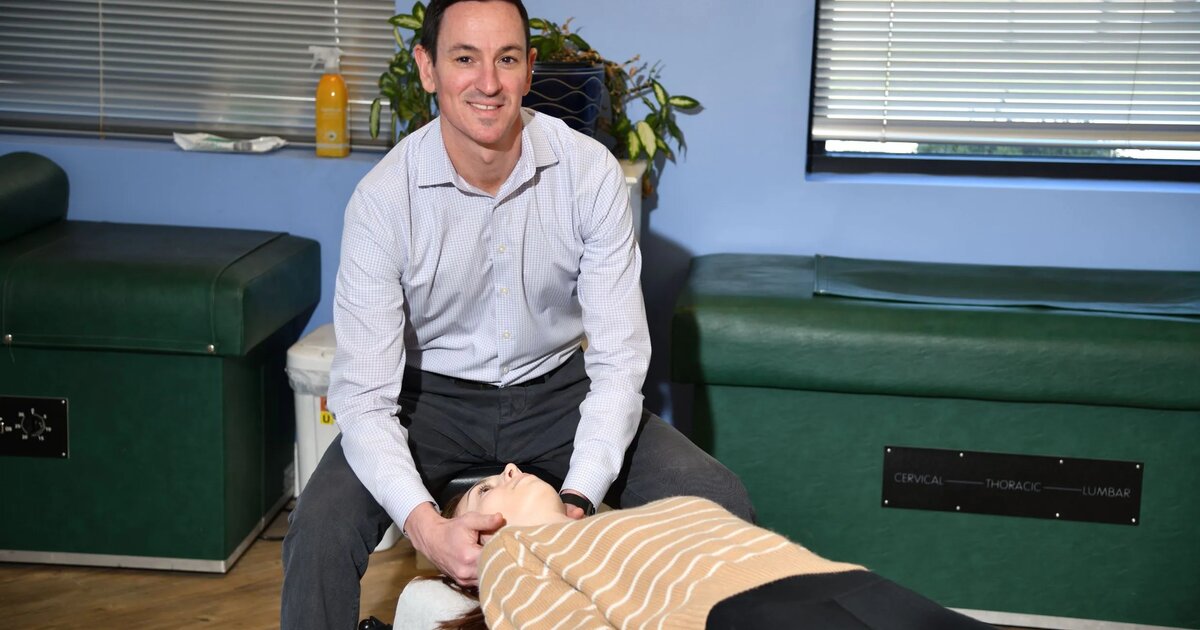
As your symptoms and exam findings change, visits are typically spaced further apart. Care may include chiropractic adjustments where appropriate, soft-tissue work, massage therapy, and home exercises designed to support mobility and stability. The goal of this stage is to help you return to normal daily activities such as driving, sitting at a desk, lifting groceries, and sleeping comfortably.
Check our services page for an overview of what we offer, and our conditions page for the types of complaints we see most often.
Phase 3: Re-evaluation and next steps
Good care includes regular check-ins. At set points we repeat key parts of the exam, ask how your daily function is changing, and decide together whether to continue, adjust, or wind down the plan. If you're not progressing the way we'd expect, that's information too. It may mean we modify the approach, or that you need to see another provider for imaging or a specialist opinion.
Phase 4: Maintenance or discharge
Some patients finish their plan and go back to their routines. Others choose periodic wellness visits afterward to stay on top of old problem areas. Both are reasonable choices, and neither is required.
What can make the timeline longer
Several things are commonly associated with a longer course of care:
- Delaying the first visit. When people wait weeks to get checked, stiffness and compensation patterns can set in.
- Previous injuries. An old neck, back, or shoulder issue can make a new injury more complicated to sort out.
- Higher-energy crashes. More forceful collisions and multiple impact points can involve more tissue.
- Ongoing physical demands. Jobs that involve heavy lifting, long drives, or hours at a desk can irritate healing tissue.
- Sleep and stress. Both influence how your body handles pain and recovery.
- Missed visits. Gaps in care make it harder to track progress and keep your plan on course.
What can help you move along
You have more influence here than you might think. These habits are worth building into your routine:
- Show up for scheduled visits and re-evaluations, and tell us honestly how you feel.
- Do the home exercises you're given, even on days when you feel okay.
- Stay gently active. For most people, complete rest isn't helpful, but your provider can tell you what's appropriate for you.
- Pay attention to posture at your desk and in the car.
- Report new symptoms promptly, especially numbness, tingling, weakness, or worsening headaches.
The National Center for Complementary and Integrative Health at NIH offers a plain-language overview of spinal manipulation, including what is known and what is still being studied. It's a useful read if you're deciding what kind of care is right for you.
Know the emergency warning signs
Chiropractic care is not the right first stop for every post-accident problem. Go to the emergency department or call 9-1-1 if you have loss of consciousness, severe or worsening headache, repeated vomiting, confusion, trouble speaking, weakness in an arm or leg, loss of bladder or bowel control, chest pain, trouble breathing, or severe neck pain with numbness. When in doubt, get emergency care first.
Why we re-evaluate instead of guessing
A good plan isn't set in stone on day one. We document how you're doing at each stage, and we use those findings to decide what's next. That helps keep your care focused on your goals, and clear records also give you a consistent account of your recovery if you're ever asked for one by your insurer or attorney. We don't give legal advice, but we are happy to provide records to the parties you authorize.
If a stubborn tendon or soft-tissue problem is still bothering you after the acute phase, it may be worth learning about PulseWave therapy, which uses focused acoustic waves and is designed to support the body's natural healing response. It isn't right for everyone, and we'll tell you honestly if it isn't a fit. You can also review financing options if cost is a concern.
Frequently asked questions
Is there a standard number of visits after a car accident?
No. The number of visits depends on your exam, your symptoms, and how you respond over time. Be cautious about any provider who gives you a fixed number before they've examined you.
Should I stop care once the pain goes away?
Not necessarily. Pain can improve before your range of motion, strength, and movement patterns have fully caught up. We re-evaluate to look at function as well as comfort, and then talk through your options. The decision to continue or stop is always yours.
What happens if I miss appointments?
Life happens. If you miss a visit, call us and we'll help you get back on track. Long gaps can make it harder to know how you're progressing, so try to keep your schedule as consistent as you can.
Will my insurance cover my care?
Coverage depends on your policy. We see many personal injury patients and can help you understand how your coverage may apply. For questions about your claim, talk to your insurer or an attorney. Self-pay options are on our financing page.
Do I need a referral?
In most cases, no. You can call us directly to schedule an evaluation.
Can I be seen if I was in a minor accident?
Yes. Low-speed collisions can still cause soft-tissue injuries, and many of the people we see were in crashes that didn't look serious. If something feels off, an evaluation can help sort it out.
Where is your office?
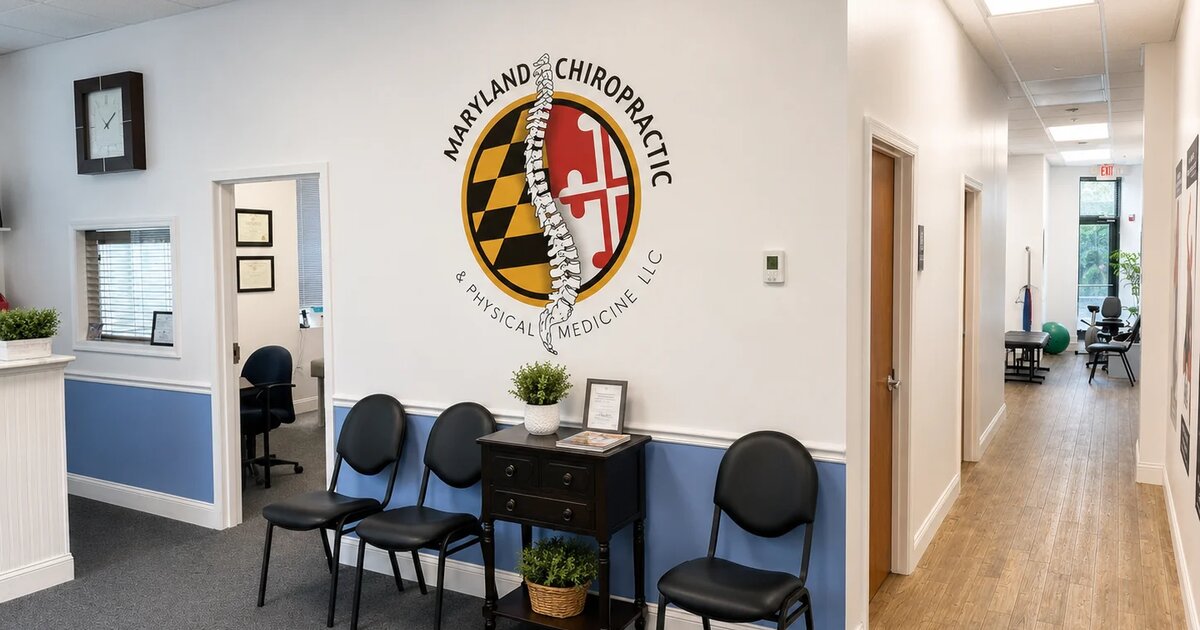
We're at 137 Mitchell's Chance Road, Suite 100, Edgewater, MD 21037, just across the South River from Annapolis, and convenient to Riva, Davidsonville, Mayo, Crownsville, Arnold, and Severna Park. Call (443) 294-6873.
Our hours are Monday and Thursday 8:30–12:30 and 2:30–6:30, Tuesday 8:30–12 and 2–4, Wednesday 8:30–2, and Friday 8:30–2:30.
Ready to get checked?
If you've been in a collision and you're wondering where you stand, the most useful next step is an evaluation. You can learn more about Dr. Curran and our team, browse our services, or contact us to schedule. If you're interested in PulseWave, you can book a consultation here.
Serving Edgewater and Anne Arundel County. #EdgewaterMD #AnneArundelCounty
This article is for general educational purposes only and does not constitute medical or legal advice, diagnosis, or treatment. It is not a substitute for an evaluation by a qualified healthcare provider. Chiropractic care and the therapies described above are not represented as cures for any condition, and individual results may vary. If you have any emergency warning signs after an accident, call 9-1-1 or go to the nearest emergency department immediately. For questions about insurance claims or legal matters, consult your insurer or a licensed attorney.