The clocks are about to fall back, the evenings are getting darker earlier, and if you drive around Edgewater, MD, you have probably already noticed deer along the shoulder at dusk. Fall is the season when deer move the most, and it is also the season when many Anne Arundel County drivers have a close call, or something worse, on the way home from work.
At Maryland Chiropractic & Physical Medicine, we see how a sudden stop affects the neck and back. This guide covers why October through December is a higher-risk stretch, how to lower your odds of a collision, what to do if one happens, and which symptoms are worth having examined. It is educational information, not a diagnosis, and it is not a substitute for emergency care.
Why Fall Brings More Deer to Anne Arundel County Roads
According to an AAA reminder to motorists, deer collisions are most common from October through December, with November often the busiest month because of the breeding season, or "rut," when male white-tailed deer travel more and pay little attention to traffic. AAA also notes that deer are most often seen around dawn and dusk, roughly 5:00 to 8:00 in the morning and 5:00 to 8:00 in the evening, and that the end of daylight saving time puts more commuters on the road during those hours.
The Maryland Department of Natural Resources says much the same thing in its fall wildlife driving advisory: shortening daylight triggers the breeding season, deer may cross at any hour while searching for mates, and drivers should be especially alert in the early morning and evening.
If you live or commute in Edgewater, Davidsonville, Riva, Mayo, Crownsville, Arnold, Severna Park, or Annapolis, you already know that wooded edges and open fields sit close to busy roads like Route 2 and Route 214. Those transitions are where deer tend to step out with little warning.
How to Lower Your Risk on the Road
No driving habit removes the risk entirely, but the guidance from the Maryland DNR and AAA is consistent and practical:
- Slow down near deer-crossing signs. The signs mark places where deer activity is frequent.
- Scan the shoulders, not just the lane ahead. Deer often travel along the roadside before they cross.
- Expect more than one. Deer often follow each other, so when one crosses, slow down and watch for another.
- Use high beams when there is no oncoming traffic. Reflected light from a deer's eyes can help you spot it sooner.
- Brake firmly and stay in your lane. Do not swerve. Swerving can cause you to lose control, cross into oncoming traffic, or strike a fixed object, which is often more dangerous than the deer itself.
- Check your mirrors before braking hard. Know whether someone is close behind you.
- Keep both hands on the wheel and your seat belt on, every trip.
Posture matters too, in a way people rarely consider. A head restraint set too low or too far back leaves your neck less supported in a sudden stop. Setting it so the middle of the restraint sits roughly behind the center of your head is a small adjustment that takes thirty seconds.
What to Do If You Hit a Deer
The steps below follow the same safety guidance from AAA and the Maryland DNR. They are also covered in more detail in our guide on what to do after a car accident in Edgewater, MD.
- Get to safety. Turn on your hazard lights, and if the car is drivable, move it out of the roadway.
- Call 911 if anyone is hurt or the vehicle is blocking traffic, and contact local police to report the collision.
- Do not approach the animal, even if it appears to be dead. An injured deer can react unpredictably.
- Take photos of the vehicle, the road, and the surrounding area, and note the time and location.
- Call your insurance company. AAA notes that comprehensive coverage, rather than collision coverage, is what typically applies to deer strikes, so it is worth confirming your own policy.
- Pay attention to your body, even if you feel fine. That last step is the one people skip.
Why You Can Feel Fine and Still Have Neck or Back Strain
A deer collision is often a sudden deceleration. Your car stops abruptly, but your head and torso keep moving for a split second before your seat belt and the seat catch them. Your neck and upper back absorb a lot of that motion, and your low back can be loaded as well if you braced against the pedals or the wheel.
That motion can strain the muscles and ligaments of the neck and back, and soft tissues like these do not always announce themselves right away. Adrenaline can mask discomfort for hours. Many people notice stiffness or an ache the next morning or after a couple of days, which is why our article on delayed whiplash symptoms after a car accident is a useful companion to this one.
A deer collision also differs from some other crashes in one way: because the impact is often at the front of the vehicle, drivers sometimes assume it was "just" a property-damage event. A vehicle can look like it needs only a bumper and a headlight while the person inside is still sore from the stop.
Symptoms Worth Having Checked
If you have been in a collision, any of the following is a good reason to get evaluated, and to seek emergency care first if the symptoms are severe or sudden:
- Neck pain or stiffness, or a reduced ability to turn your head
- Pain between the shoulder blades or across the upper back
- Headaches that began after the crash
- Low back pain or tightness
- Pain, tingling, or numbness that travels into the arm or leg
- Dizziness, trouble concentrating, or unusual fatigue
Seek emergency care right away for severe pain, loss of consciousness, confusion, weakness, numbness that is spreading, trouble with bladder or bowel control, or chest or abdominal pain. A chiropractic visit is not a replacement for the emergency room when symptoms are serious.
What a Chiropractic Evaluation After a Collision Looks Like
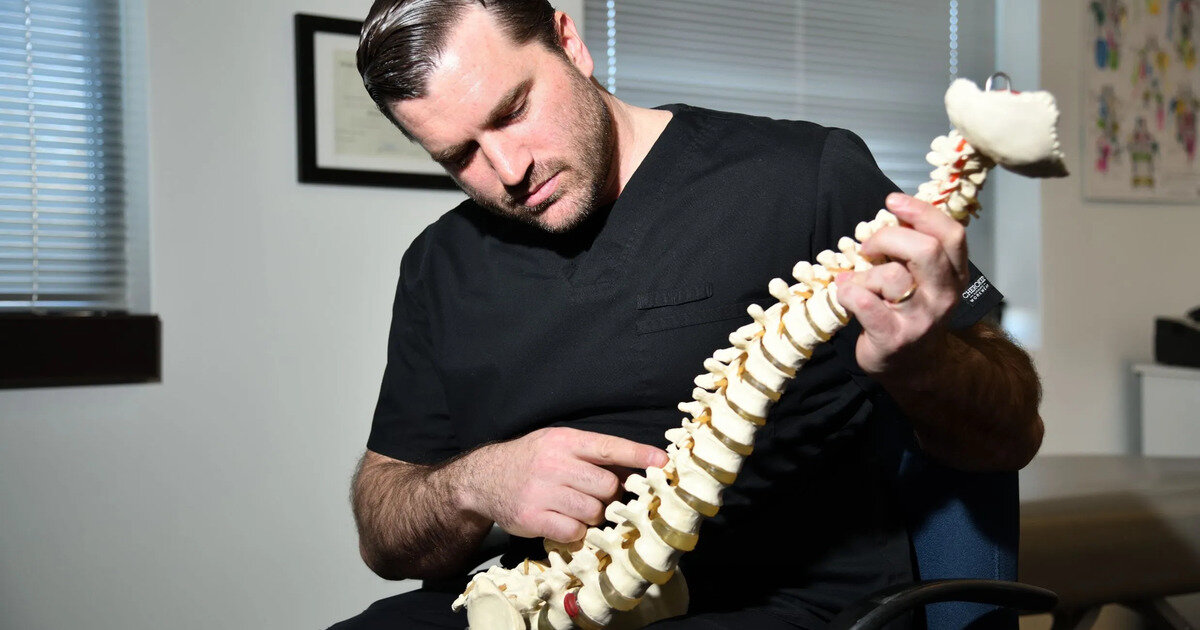
When someone comes to our Edgewater office after a crash, the first visit is about understanding what happened and what the body is telling us. In general, that includes:
- A conversation about the collision, your symptoms, and your health history
- A physical examination that looks at posture, range of motion, and tender or guarded areas
- Orthopedic and neurological screening, so we can recognize when something calls for imaging or a referral to another provider
- A discussion of care options that fit your findings and your goals
If something falls outside what chiropractic care is meant to address, we will say so and point you toward the right provider. You can see the full range of what we offer on our services page and read about the conditions we commonly see.
A systematic review of chiropractic management of adults with whiplash-associated disorders by Shaw and colleagues, published in the journal Work in 2010, found a baseline of evidence suggesting chiropractic care may improve cervical range of motion. The authors also noted that the evidence is limited and that some recommendations rest on clinical consensus. That is an honest summary of where the research stands: promising in places, not settled, and a good reason for care that is tailored to the individual. Individual results may vary.
Soft-Tissue Care Options Beyond Spinal Adjustments
Spinal care is only one part of how we approach recovery. Depending on what an examination shows, a care plan may include:
- Chiropractic adjustments designed to support joint motion and comfort
- Massage therapy and cupping, which may help with muscle tension and tightness
- Therapeutic exercise and movement guidance to support daily activity as things settle
- PulseWave shock wave therapy, which uses focused acoustic waves and is designed to stimulate the body's natural healing response in targeted soft-tissue areas. You can learn more on our PulseWave page or read what PulseWave therapy is.
Whether any of these fits you depends on your examination, and not every option is right for every person.
Documentation, Insurance, and Peace of Mind
After any collision, it helps to keep a simple record: the date and location, photos, the police report number if there is one, and the dates and details of any symptoms and visits. Notes you make in the first days are often more accurate than memory weeks later.
Questions about coverage and how care is paid for are common, and we are glad to walk through them with you. Our financing page explains the options we offer. For legal questions, such as fault or claims, an attorney is the right person to ask. We are not lawyers and do not provide legal advice.
Frequently Asked Questions
When should I get checked after hitting a deer?
If you have any pain, stiffness, headache, or other symptoms, getting evaluated sooner rather than later gives you a clearer picture. If symptoms are severe, go to the emergency room first. Even if you feel fine, it is reasonable to book a visit within the first few days, since soft-tissue symptoms can show up late.
Is a deer collision handled the same way as a crash with another vehicle?
From a body-care standpoint, the evaluation is similar: we look at how you moved during the stop and what you are feeling now. The insurance side can differ, since AAA notes that deer strikes are typically handled under comprehensive coverage. Check with your insurer about your own policy.
Can I see a chiropractor if I already saw my primary care doctor or urgent care?
Yes. Many people visit urgent care or their primary care provider first to rule out serious injury, then come to us for a musculoskeletal evaluation and care. We are happy to work alongside your other providers.
Do I need a referral?
In most cases you can call and schedule directly. Call us at (443) 294-6873 and our team will walk you through the first visit.
Should I avoid driving at dawn and dusk during the fall?
You do not have to, but it helps to be more alert. Slow down in wooded areas, scan the shoulders, and use your high beams when it is safe. These are the same tips given by the Maryland DNR and AAA.
Can chiropractic care help with neck pain after an accident?
We do not promise outcomes. Chiropractic care is designed to support joint motion and comfort, and many people find it a helpful part of recovery, but individual results may vary, and the right plan depends on your examination.
Local Care in Edgewater, MD
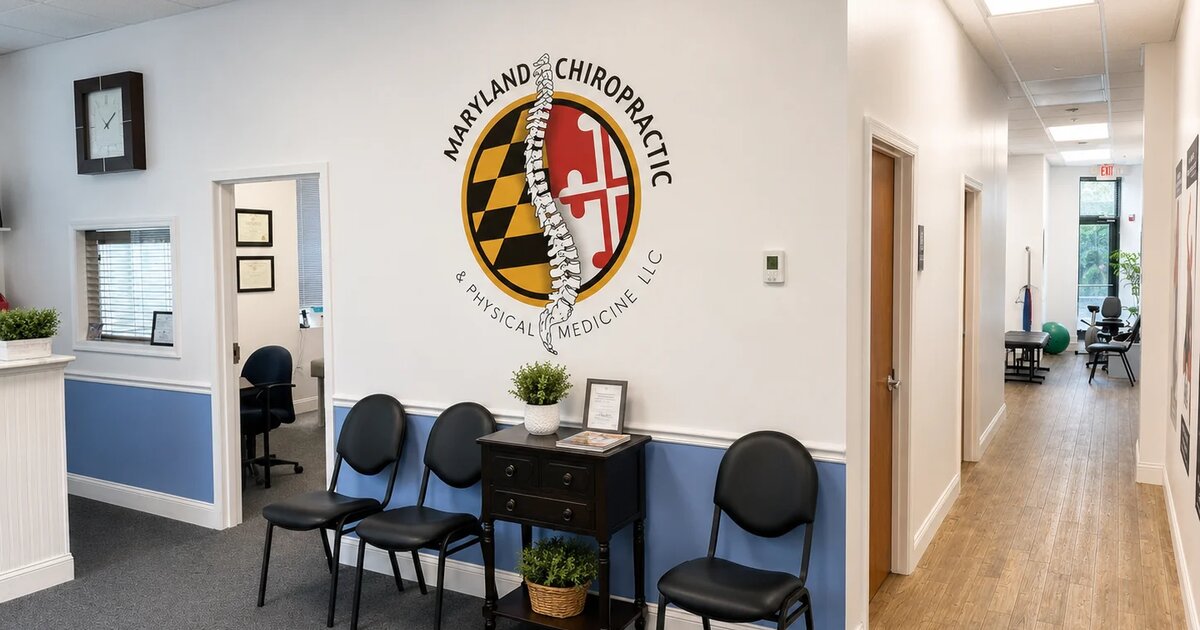
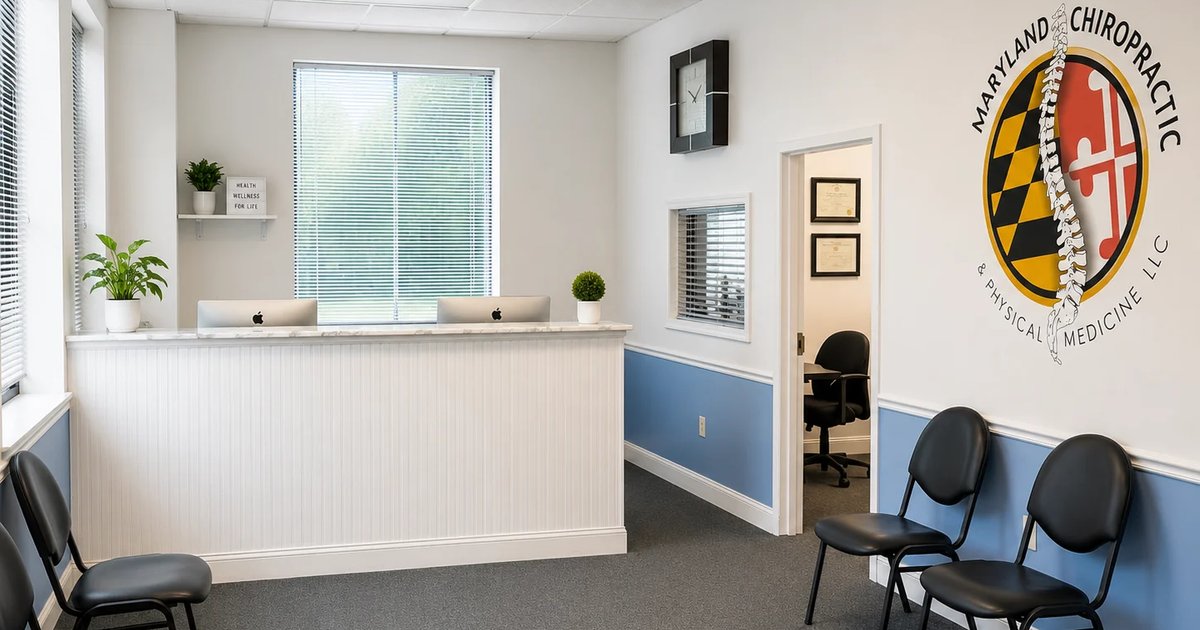
Maryland Chiropractic & Physical Medicine is located at 137 Mitchell's Chance Road, Suite 100, Edgewater, MD 21037, serving Edgewater and neighbors throughout Anne Arundel County, including Annapolis, Severna Park, Davidsonville, Riva, Crownsville, Mayo, and Arnold.
Phone: (443) 294-6873
Office hours:
- Monday and Thursday: 8:30 AM to 12:30 PM and 2:30 PM to 6:30 PM
- Tuesday: 8:30 AM to 12:00 PM and 2:00 PM to 4:00 PM
- Wednesday: 8:30 AM to 2:00 PM
- Friday: 8:30 AM to 2:30 PM
If you have been in a collision, or you are simply feeling sore after a close call, you can request an appointment online, learn more about Dr. Curran and our team, or contact us with questions. We would rather hear from you early than have you wonder about it for weeks.
Be safe out there this fall, Anne Arundel County.
#EdgewaterMD #AnneArundelCounty
This article is for educational purposes only and is not intended to diagnose, treat, cure, or prevent any condition, or to replace the advice of your physician or other qualified health professional. If you are experiencing a medical emergency, call 911. Individual results may vary.